


Home Office Air Conditioning: 2026 Productivity Guide
Imagine you're five minutes into an important video call when the afternoon sun hits your desk. You have the desk fan on full power, but it's just pushing warm air around; the noise is so loud your clients can barely hear you. It's hard to maintain your professional edge when your workspace feels like a greenhouse. Installing dedicated air conditioning for home office use isn't just about luxury. It's about reclaiming your ability to work effectively during those 30°C+ Essex heatwaves.
We understand that a professional workspace should feel professional, not like a sauna. You've likely invested in high-quality tech and ergonomic furniture, yet the room's temperature remains the one thing you can't control. This guide shows you how a discreet, F-Gas compliant installation provides a silent, climate-controlled environment for peak performance. We'll cover everything from current UK energy efficiency and running costs to ensuring a tidy finish that respects your home's decor and layout.
Table of Contents
Why a Home Office Needs Dedicated Air Conditioning
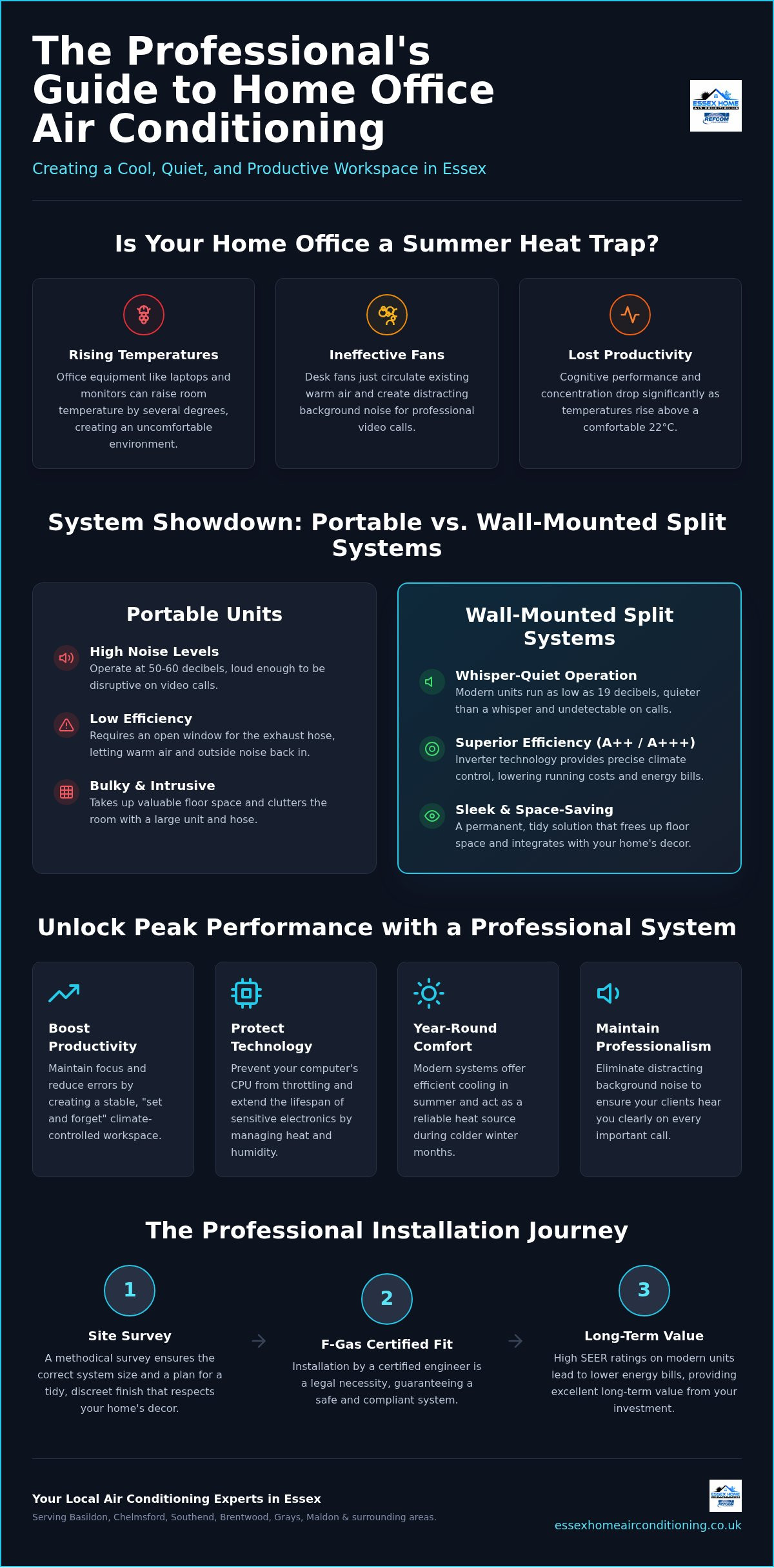
Working from home in Essex has many perks, but the summer months often bring a specific challenge. When temperatures outside climb above 25°C, most home offices quickly become uncomfortable. Unlike a large open-plan commercial building, a standard spare room or garden office has limited airflow. You might try to solve this with a desk fan, but these devices only move existing warm air around your face. They don't actually lower the room's temperature. True comfort requires a system designed to remove heat entirely.
Air conditioning works by transferring heat from the inside of your room to the outside, creating a stable climate regardless of the weather in Chelmsford or Southend. This is particularly important because your office equipment is actively working against you. Every monitor, laptop, and printer generates heat whilst it's plugged in. In a small, insulated space, this hardware can raise the ambient temperature by several degrees within just a few hours. Without a way to vent this energy, your workspace becomes a heat trap.
Boosting Productivity and Concentration
It's hard to focus when you're physically uncomfortable. Research into workplace environments consistently shows that cognitive performance drops and error rates increase as temperatures rise above 22°C. You start making small mistakes. Your concentration slips. By installing air conditioning for home office use, you create a "set and forget" environment. You don't have to keep getting up to open windows or adjust noisy fans. This stability allows you to maintain a professional mindset throughout the day. It transforms a stifling spare room into a workspace where you can actually get things done.
Protecting Your Office Technology
Your workspace likely contains thousands of pounds worth of electronics. High ambient temperatures are the enemy of longevity for this hardware. Whether you're working from a loft conversion in Brentwood or a garden room in Billericay, heat buildup is a serious risk. When a room gets too hot, your computer's CPU will "throttle" or slow down to prevent itself from melting. This leads to sluggish performance and frustrating lag during video calls.
Laptops are especially vulnerable. Constant heat shortens the lifespan of lithium-ion batteries and can cause internal components to fail prematurely. A professionally installed split system doesn't just cool the air; it also helps manage humidity levels. This prevents the "stuffy" feeling and protects sensitive circuitry from the damp conditions often found in poorly ventilated home extensions or older Essex properties.
Comparing Options: Portable Units vs. Wall-Mounted Split Systems
Many Essex homeowners start with a portable unit bought from a local retailer. It seems like a cost-effective way to get air conditioning for home office use, but the reality often falls short of expectations. These units are essentially a large compressor sat directly in your workspace. They require a thick, flexible hose to be poked through a window, which often lets in more warm air and local noise than the machine can handle. It's a temporary fix that rarely provides the professional environment you need.
Wall-mounted split systems are the gold standard for a reason. By separating the noisy compressor (which stays outside) from the quiet blower unit (which stays inside), you get a permanent, tidy solution. You don't lose any floor space, and there are no awkward hoses cluttering your decor. Whilst the initial investment is higher, the performance and silence are incomparable for anyone working a full week from home.
The Problem with Noise on Professional Calls
Noise is the biggest dealbreaker for remote workers. A typical portable unit operates at around 50 to 60 decibels. That's loud enough to be picked up by your microphone during a Zoom or Teams call, creating a distracting hum for your clients. In contrast, modern wall-mounted split systems often feature "silent modes" that drop as low as 19 decibels. This is quieter than a whisper. It allows you to maintain a professional atmosphere without having to choose between a cool room and a clear conversation. If you are tired of shouting over a fan, you can request a site survey to see how a silent system would fit your office.
Efficiency and Running Costs
Efficiency is where the gap between portables and permanent systems really widens. When looking at ENERGY STAR certified room air conditioners, the data shows that permanent installations are significantly better at managing energy. Most modern split systems carry an A++ or A+++ energy rating. They use inverter technology, which allows the motor to slow down or speed up as needed rather than constantly clicking on and off at full power.
This precision keeps your office at a steady temperature and prevents the "ice and fire" cycle of cheaper units. Based on 2026 electricity rates, a modern inverter system can be up to 40% more efficient than an entry-level portable. You aren't just buying a cooling tool; you're investing in your home's infrastructure and keeping your long-term energy bills under control. It's a methodical approach to home improvement that pays off every time the UK hits another heatwave.
Choosing the Right System for Your Essex Workspace
Selecting the right hardware for your property is about more than just picking a brand. It requires a methodical look at your room's specific layout. The most important figure to consider is the BTU (British Thermal Units) rating. This measures the cooling capacity of the unit. A standard small office usually requires around 7,000 to 9,000 BTU, but this changes if you have large south-facing windows or multiple high-spec computers running simultaneously. Getting this calculation right ensures you aren't paying for more power than you need, whilst avoiding a system that struggles to keep up during a heatwave.
Placement is equally vital for a professional environment. You want to avoid "cold spots" or direct drafts hitting your back whilst you sit at your desk. We typically recommend installing the indoor unit high on a side wall. This allows the air to circulate naturally across the ceiling before dropping down, creating a consistent temperature. A tidy, well-planned installation ensures the pipework is hidden and the unit doesn't disrupt the flow of your room's decor.
Loft Conversions and High Heat Gain
If your office is in a loft conversion in Brentwood or Billericay, you likely know it's the hottest room in the house. Heat rises from the lower floors, and the sun beats directly onto the roof tiles all day. Even with modern insulation, these spaces can become unbearable by mid-morning. For these top-floor offices, we often recommend slightly more powerful air conditioning for home office setups to compensate for this high heat gain. Mechanical cooling is often the only way to make a loft workspace viable during July and August, as natural airflow through skylights is rarely enough to lower the temperature.
Garden Rooms and Outbuildings
Standalone garden offices and timber-framed buildings have their own unique requirements. These structures often have less thermal mass than a brick house, meaning they heat up and cool down very quickly. A split system is ideal here because it provides a total climate solution. In the winter, the unit works as a highly efficient heat pump, warming the space much faster than a standard electric radiator. When we install in garden rooms, we take extra care with the external unit placement. We ensure it's tucked away discreetly, maintaining the aesthetic of your garden whilst remaining fully accessible for future servicing.
The Installation Process: What to Expect from a Professional Fit
A professional installation for air conditioning for home office use begins long before the actual fitting day. It starts with a methodical assessment of your workspace to ensure the system performs exactly as promised. Unlike a simple plug-and-play appliance, a split system requires precision engineering to connect the indoor and outdoor components. A typical single-room installation is usually completed within one day, meaning your work schedule is barely disrupted.
Safety and legality are our top priorities. In the UK, it is a legal requirement for any technician working on split systems to be F-Gas certified. This certification ensures that the refrigerants used are handled with care, preventing leaks and protecting the environment. Choosing a certified professional isn't just about peace of mind; it's about ensuring your manufacturer's warranty remains valid. We take pride in doing things the right way, following every regulation to the letter.
The Site Survey and Design Phase
During the initial survey, we look at more than just where the unit will hang. We assess your home's electrical capacity and identify the best location for the external condenser. For Essex residents, we ensure the external unit is placed to meet "permitted development" rules, which usually means keeping it at least one metre from your property boundary. This phase is about transparency. We discuss the best indoor unit styles to complement your office decor and provide a clear, no-obligation quote that covers every aspect of the job.
A Clean and Professional Installation Day
On the day of the fit, our focus is on a tidy and discreet finish. We use high-quality trunking to hide pipework, or route it through wall cavities where possible, so your office remains a professional environment. We treat your home with respect, using dust sheets and cleaning up thoroughly once the work is done. Before we leave, we'll demonstrate the remote control and any smartphone app features, ensuring you're comfortable with the settings. Finally, we hand over your F-Gas certificate and all warranty documentation. You can book your professional site survey here to start the process.
Costs, Efficiency, and Long-Term Value in 2026
Investing in permanent air conditioning for home office use is a decision that balances upfront costs with long-term savings. In the current UK market, a professional supply and installation of a single-room wall-mounted split system typically starts from around £1,350. While this is higher than the price of a noisy portable unit, the value lies in the lifespan and efficiency of the hardware. A well-installed system lasts for over a decade and operates far more cheaply than temporary fixes. In Essex towns like Brentwood and Chelmsford, where high-quality home workspaces are in high demand, a fixed AC system can also act as a professional upgrade that adds genuine appeal to your property's resale value.
Running costs are another area where modern technology wins. With the 2026 average electricity rate at 26.11p per kWh, an energy-efficient inverter system costs between 10p and 30p per hour to run. This is significantly less than the 33p per hour typically seen with portable units. Because these systems are designed for residential use, they reach the target temperature quickly and then throttle back to a low-power state to maintain it. It's a methodical approach to climate control that keeps your monthly bills predictable.
Year-Round Comfort with Heat Pump Technology
Modern air conditioning units are actually air-to-air heat pumps. This means they don't just cool your office in July; they can be your primary heat source in January. Heat pumps are incredibly efficient because they move heat rather than generating it from an electric element. When compared to a standard electric radiator, a split system can be up to 40% more efficient. This allows you to warm your garden office or loft conversion rapidly whilst lowering your household's overall carbon footprint. It's a total climate solution that ensures your workspace is usable every day of the year.
Protecting Your Investment
To ensure your system remains at peak efficiency, regular maintenance is a must. Most manufacturers require an annual service to keep their multi-year warranties valid. This service involves checking the refrigerant pressures, cleaning the internal coils, and ensuring the condensate drainage is free of blockages. You can perform simple tasks yourself, such as vacuuming the dust filters every few months, but a professional check ensures the system stays silent and safe.
If you want to learn more about looking after your hardware, read our Air conditioning servicing Essex guide. Keeping your filters clean and your outdoor unit clear of debris ensures the motor doesn't have to work harder than necessary. When you're ready to upgrade your workspace, you can get a professional quote for your home office. We'll help you choose a tidy, quiet system that fits your budget and your professional needs.
Transform Your Essex Workspace for Year-Round Success
Your home office should be a place where you can produce your best work without the distractions of summer heatwaves or noisy desk fans. By choosing a permanent solution, you're investing in a professional-grade environment that stays quiet during video calls and energy-efficient throughout the year. Whether you're working from a loft in Chelmsford or a garden room in Southend, the right air conditioning for home office setup makes a significant difference to your daily focus and productivity.
At Essex Home Air Conditioning, we bring over 20 years of trade experience to every project. Our F-Gas certified installers specialise in tidy, residential split-system fitting that respects your room's layout and decor. We don't believe in high-pressure sales tactics; we focus on methodical, compliant work that provides peace of mind. Ready to reclaim your workspace? You can request your free home office site survey in Essex today. Let's make your office the most comfortable room in your house.
Frequently Asked Questions
Is air conditioning for a home office tax-deductible in the UK?
Whether your installation is tax-deductible depends on your business structure and how you use the room. If you're a limited company and the office is used solely for work, you can often claim capital allowances on the equipment. For sole traders, the cost is usually apportioned based on the percentage of business use. You should always consult a qualified accountant to confirm your specific eligibility under current HMRC rules before proceeding.
How loud is a wall-mounted air conditioning unit during video calls?
Modern wall-mounted split systems are designed for near-silent operation. Premium units often feature a "quiet mode" that drops noise levels to around 19 decibels, which is quieter than a whisper. This is a massive improvement over portable units or noisy desk fans. Your microphone will not pick up the sound during Zoom or Teams calls, allowing you to maintain a professional atmosphere while staying cool in your Essex workspace.
Do I need planning permission for a home office air conditioner in Essex?
In most Essex residential properties, installing a single air conditioning unit falls under "permitted development" and doesn't require planning permission. This applies as long as the external unit is over one metre from the boundary and meets specific size limits. However, if you live in a flat, maisonette, or a conservation area in places like Leigh-on-Sea or Brentwood, you will likely need express consent from your local council.
Can I install a home office AC unit myself to save money?
You cannot legally install a split-system air conditioner yourself. In the UK, anyone handling refrigerants must be F-Gas certified by law. Attempting a DIY fit is illegal and will immediately void your manufacturer's warranty. It also risks safety issues and refrigerant leaks. A professional installation ensures the system is safe, compliant, and performs efficiently for years, protecting your investment in air conditioning for home office use.
How much does it cost to run a home office air conditioner per day?
Based on the July 2026 electricity price cap of 26.11p per kWh, a modern inverter system costs roughly 10p to 30p per hour to run. For a typical eight-hour workday, this equates to a daily cost of between 80p and £2.40. This is significantly cheaper than running multiple electric heaters in winter or inefficient portable cooling units during the peak of an Essex summer heatwave, especially when using an A++ rated system.
What is the best temperature to set for office productivity?
Research into workplace ergonomics suggests that the optimal temperature for cognitive performance is between 21°C and 22°C. When a room gets warmer than 24°C, error rates typically increase and concentration levels drop. Using your air conditioning for home office to maintain this steady "sweet spot" prevents the afternoon slump. It allows you to stay sharp and productive without the physical fatigue caused by excessive heat or high humidity.
How long does a professional air conditioning installation take?
A standard installation for a single-room wall-mounted split system is usually completed within one working day. Our team arrives in the morning to handle the mounting, pipework, and electrical connections. We then commission the system and test it thoroughly before showing you how to use the controls and any smartphone apps. We aim to be in and out quickly, leaving your Essex home office tidy and ready for work.
Can one unit cool both my office and an adjacent bedroom?
A single wall-mounted unit is designed to cool the specific room where it's installed. Airflow is restricted by doorways and walls, so it won't effectively cool an adjacent bedroom even if the door is left open. If you need to control the temperature in two rooms, we recommend a multi-split system. This uses one external condenser connected to two separate indoor units, providing independent climate control for each space.


Comments