


How to Keep Your Home Cool in Summer: 2026 UK Guide

Keeping windows open all day can make a hot house warmer, not cooler. If you’re wondering how to keep house cool in summer UK, start by blocking direct sunlight and letting cooler air in at the right time. These steps can help when bedrooms stay stuffy into the evening or sunny living spaces become uncomfortable.
You don’t need to jump straight to air conditioning. This guide covers practical ways to reduce indoor heat, manage curtains, shading and ventilation, and identify which rooms need the most attention. You’ll also learn when a professionally installed split system could help if passive measures aren’t enough, and how it can provide heating as well as cooling.
Table of Contents
Why UK Homes Overheat in Summer - and Which Rooms Need Attention
Some UK homes stay warm long after the outdoor temperature falls. Sunlight entering through windows, heat held in walls and ceilings, and limited airflow can leave particular rooms uncomfortable into the evening. The pattern varies from home to home, so start by spotting where and when heat builds rather than treating every room alike.
A room is more likely to overheat if it gets direct sun, has little shade, stays warm after sunset or feels stuffy when occupied. These clues can help you decide how to keep house cool in summer UK homes before choosing which measures to try.
Which parts of a home are most likely to stay hot?
Top-floor rooms can feel warmer as heat gathers beneath the roof, while large windows exposed to strong sunlight can warm a bedroom or living area. Rooms with little external shade may receive direct sun for much of the day. How you use a space matters too: people, computers and other equipment add warmth, so a home office or occupied bedroom may feel less comfortable than a spare room.
How to spot your home’s hot rooms
Make a room-by-room check on a warm day. Note which windows receive direct sun and when, whether the room has nearby shade, how many people use it, and whether it still feels warm in the evening. Compare rooms at similar times rather than relying on one brief impression. Homes across Essex differ in layout, glazing and surroundings, so your own observations are a useful starting point.
These checks also help you focus on passive measures, such as reducing the sun’s impact before a room heats up. The broader principles are outlined in Passive Cooling Strategies. Keep a simple note of your findings. It will help you identify which rooms need attention first and whether your approach is making them more comfortable.
How to Keep Heat Out and Cool Air Moving Through Your Home
Once you know which rooms need attention, focus on stopping heat getting in before trying to cool the space. Close curtains or blinds on sun-exposed windows while direct sunlight is strongest. External shading can also help block the sun before it warms the glass and room. Small changes to ventilation and daily habits can make your home more comfortable without treating every window the same way.
When should you open windows to ventilate?
Compare the air outdoors with the temperature inside. If outside feels cooler, open suitable windows to let cooler air in. Where practical, use openings on different sides of the home to help air move through, rather than relying on one window. Close them again when outdoor air becomes warmer than the rooms. Opening every window during the hottest hours can bring warm air inside instead of cooling your home.
How can shading and everyday habits reduce indoor heat?
Keep curtains or blinds drawn on windows receiving direct sun, especially in rooms you plan to use later. At the same time, reduce avoidable heat from appliances and cooking. Switch off equipment when it’s not needed, and choose cooler times to use the oven or hob where practical. These steps work together: shade limits incoming solar heat, while fewer heat-producing activities reduce the warmth building up indoors.
Shade exposed windows before direct sunlight reaches them.
Save cooking that warms the room for a cooler part of the day.
Turn off unused appliances and electronics.
If these measures still leave a particular room uncomfortable, a tailored home cooling plan may help you consider the next step. Find more information through Essex Home Air Conditioning’s air conditioning enquiry page.
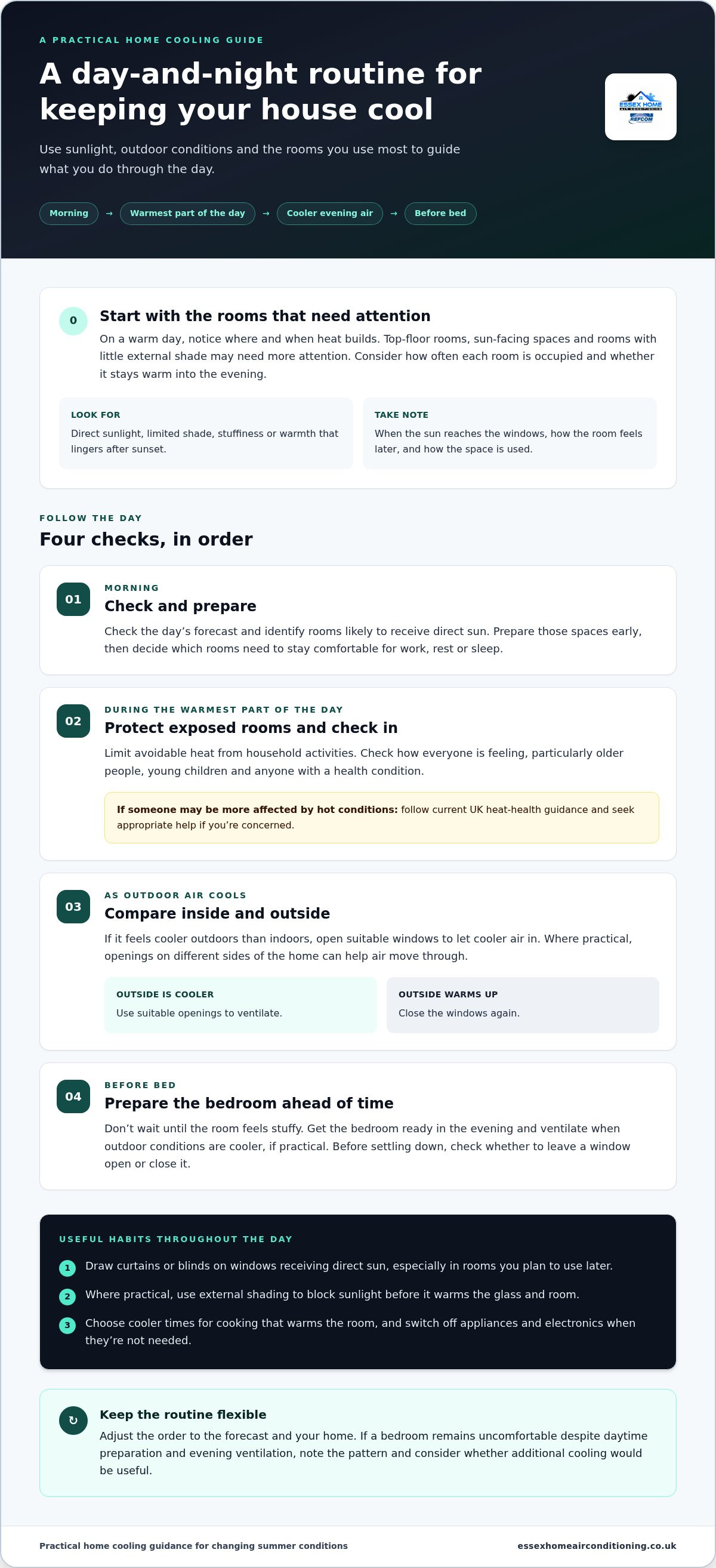
A Day-and-Night Routine for Keeping Your House Cool in Summer
A little planning helps you respond to changing conditions through the day, rather than waiting for rooms to become uncomfortable. If you’re working out how to keep house cool in summer UK, this routine gives you a practical order to follow. Adjust it to the forecast, your home and the people living in it.
Morning: check and prepare. Look at the day’s forecast, then identify which rooms are likely to receive direct sun. Prepare those spaces early and decide which rooms need to stay comfortable for work, rest or sleep.
During the warmest part of the day: protect and check in. Focus on exposed rooms and limit avoidable heat from household activities. Check how everyone is feeling, particularly older people, young children and anyone with a health condition. If someone may be more affected by hot conditions, follow current UK heat-health guidance and seek appropriate help if you’re concerned.
As outdoor air cools: review the rooms. Compare how the house feels inside with conditions outdoors. If outside is cooler, use suitable openings to bring in fresh air. Close them again if the air outside warms up. Check whether the rooms you prioritised feel more comfortable.
Before bed: prepare the bedroom. Don’t wait until the room feels stuffy. Get it ready in the evening and ventilate when outdoor conditions are cooler, if practical. A quick check before settling down can help you decide whether to keep a window open or close it.
Keep the routine flexible. If the warmest weather arrives early, protect affected rooms sooner. If a bedroom remains uncomfortable despite daytime preparation and evening ventilation, note the pattern. It can help you decide whether additional cooling would be useful.
When Summer Cooling Measures Fall Short: Home Air Conditioning in Essex and How to Keep House Cool in Summer UK
Air conditioning can be a practical option in a UK home. Shading and well-timed ventilation are sensible first steps, but if the same rooms remain uncomfortable through repeated warm spells, controlled cooling may be worth considering. What works depends on which rooms are affected, what you’ve tried and how your household uses them.
Portable unit or installed split system: what is the difference?
A portable unit can be moved between rooms and typically vents warm air outdoors through a hose at a window. It can offer a temporary option, though the hose and open window can make cooling less efficient than a split system. A professionally installed split system has an indoor unit connected to an outdoor unit. Planning should consider room volume, glazing, insulation, orientation, occupancy and heat load, not floor area alone. For more on this type of installation, see the guide to Wall Mounted Air Conditioning for Homes: 2026 Guide.
When is it worth discussing a home cooling system?
Think about whether discomfort keeps returning, which rooms are affected and when they’re used. A bedroom that stays too warm at night may need a different approach from a sunny home office used during the day. Essex Home Air Conditioning designs and installs residential systems around the home and rooms being served. The team works across Essex, including Basildon, Benfleet, Rayleigh, Canvey Island, Wickford, Billericay, Brentwood, Leigh-on-Sea, Southend, Maldon, Chelmsford, Burnham and Grays.
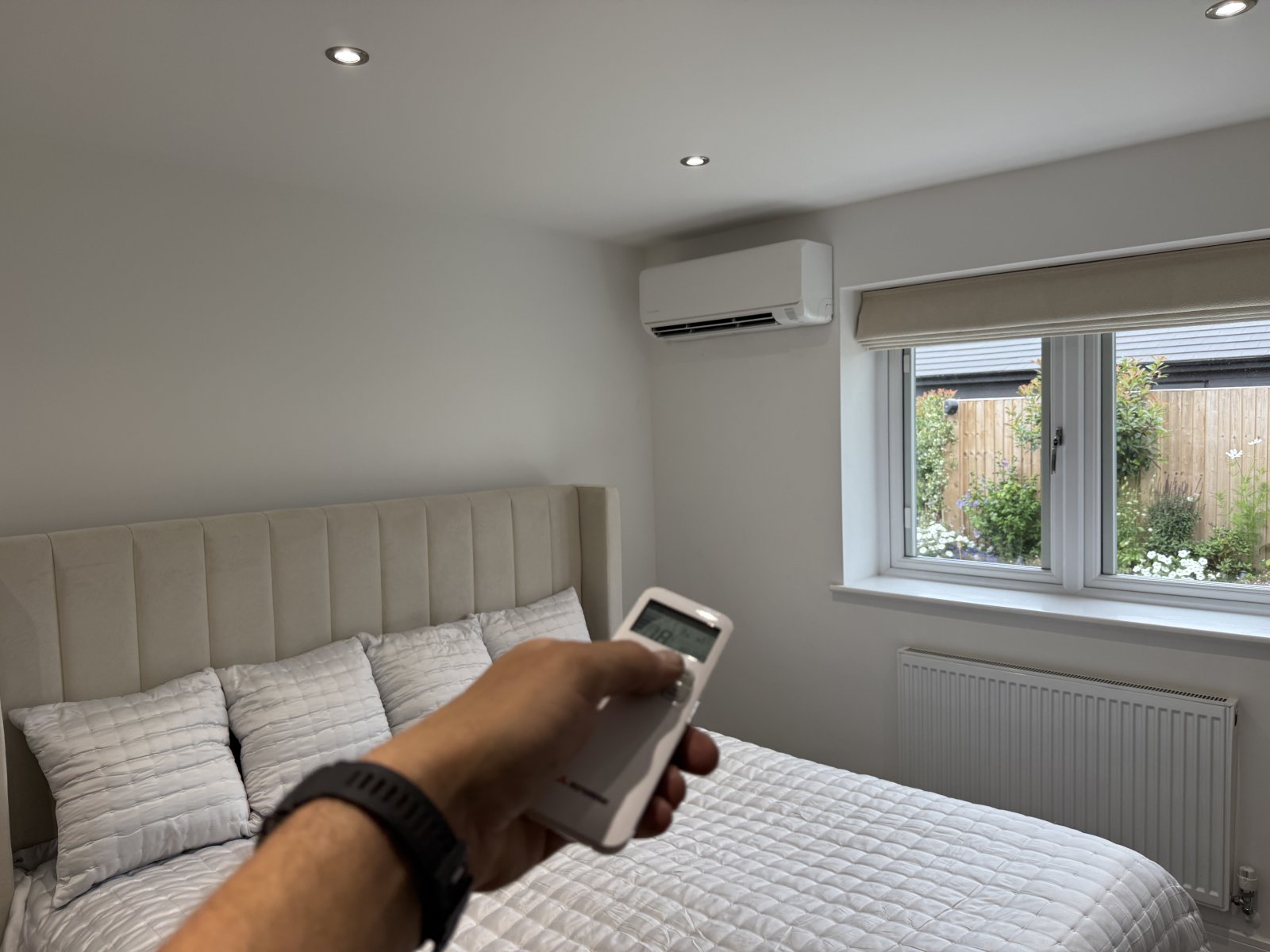
Modern split air conditioning can also work as an air-to-air heat pump, providing both cooling and heating. That makes it a year-round option to consider, rather than a system used only during summer. Installation involving refrigerant should be handled by a suitably qualified professional. Essex Home Air Conditioning is F-Gas REFCOM registered.
If passive measures aren’t enough, you can explore home cooling options and consider whether a system suits your rooms and routine. Compare the practical alternatives before deciding what will work for your household.
Make Your Home More Comfortable for the Summer Ahead
Focus first on the room that disrupts your routine most, whether that’s a bedroom, home office or conservatory. Keep track of when it becomes uncomfortable and which measures help. That gives you a clearer starting point if you’re weighing up how to keep house cool in summer UK homes without making changes you don’t need.
If you’re considering a longer-term option, Essex Home Air Conditioning can help you explore a plan shaped around your home. Oliver leads the team and brings over 20 years of trade experience.
A clear plan for the rooms that matter can help you prepare for the next hot spell.
Frequently Asked Questions
Is air conditioning worth considering for a UK home?
It can be worth considering if indoor heat regularly disrupts sleep, work or time spent at home. Before deciding, think about whether you need cooling in one room or several, and how those spaces are used at different times. This helps you assess whether a system fits your household, rather than treating air conditioning as a standard choice for every home.
Can a split air conditioner heat a room in winter?
Yes, a modern split system can heat as well as cool. If you’re considering winter use, note which rooms you’d want to heat and when you use them, such as a home office during the day or a bedroom in the evening. Share those details when planning an installation, as the chosen system and conditions affect its heating performance.
How often should a home air conditioner be serviced?
Follow the maintenance schedule in the manufacturer’s guidance, as recommended checks differ between systems. Clean user-accessible filters only as the instructions describe, and arrange professional servicing to inspect the equipment. If cooling or airflow changes noticeably, note what’s different and when it began. Don’t remove covers or open sealed parts yourself. A qualified engineer can assess the system safely.
Does a portable air conditioner need a window?
Most portable air conditioners need to exhaust warm air outdoors through a hose, usually via a window or window kit. Seal around the hose as well as the kit allows, since gaps can let warm air back in. Before using one, check that the hose can reach the window without being stretched and that the arrangement won’t obstruct access or create a trip hazard.
What should I do if my home remains hot overnight?
If someone is struggling with the heat, move them to a cooler room or location if possible and follow current UK heat-health guidance. Seek urgent medical help if symptoms suggest serious illness. For recurring hot nights, keep a brief record of which room is affected, how it was being used and what conditions seemed to help. That record can guide future changes to the home.
For help planning home air conditioning in Essex, contact Essex Home Air Conditioning to discuss your rooms and arrange a quotation.
Comments