


Why Is My Air Conditioner Leaking Water in Grays? Find the Causes

A puddle beneath your air conditioner usually points to a drainage or airflow problem. If you’re wondering why your air conditioner is leaking water in Grays, common causes include a blocked condensate drain or a dirty filter restricting airflow. The water is usually condensation that should drain outside, not drip from the indoor unit.
A leak can be worrying, especially if water is collecting on the floor or staining a wall. The cause may be simple, but ongoing dripping, ice or unusual noise can signal a fault that needs attention.
This guide explains why an AC may leak from the bottom or indoor unit, how a dirty filter can contribute, and what routine maintenance can do to help prevent leaks. You’ll also learn what you can safely check yourself and when a persistent leak calls for professional attention.
Table of Contents
Why is my AC leaking water from the bottom in Grays?
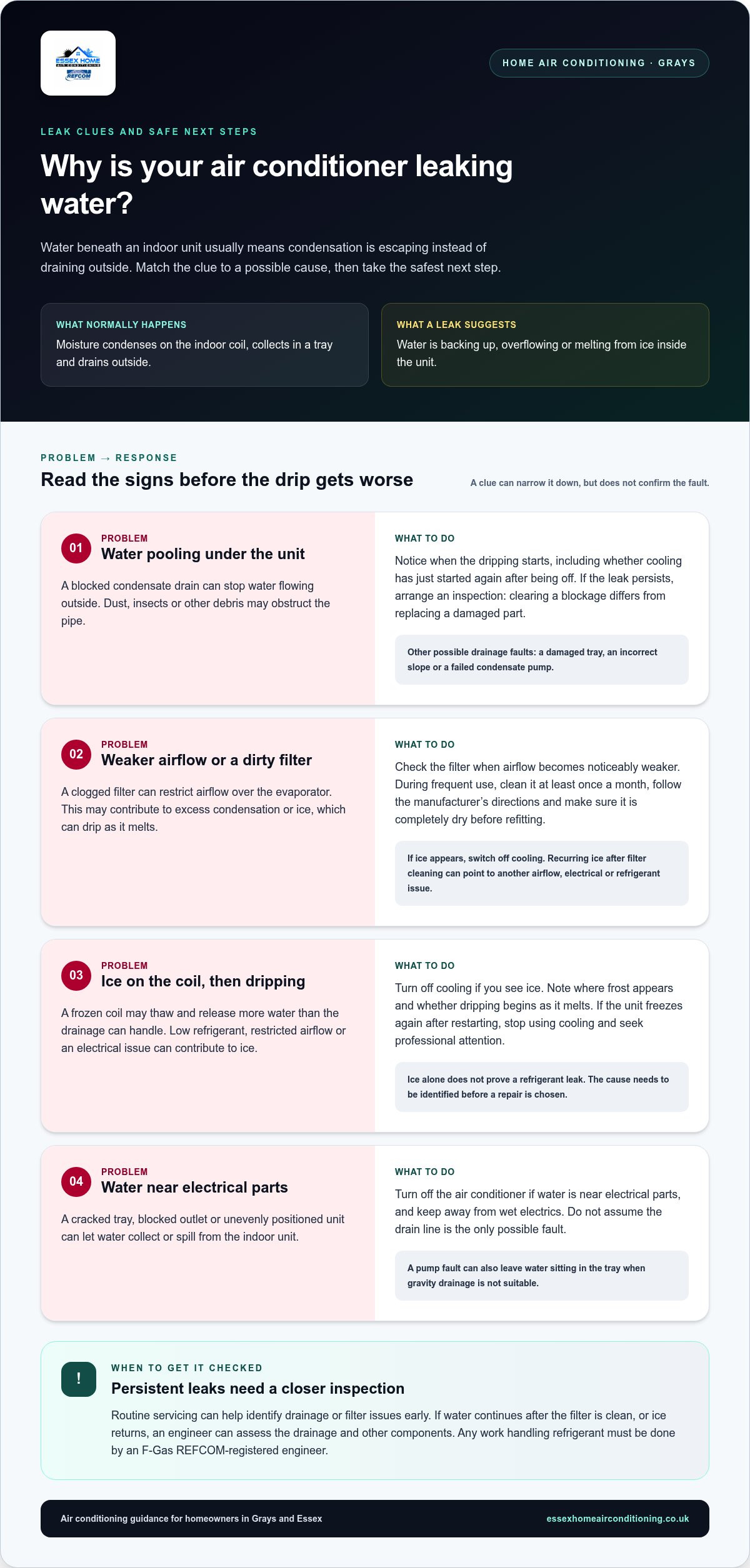
A puddle beneath an indoor unit usually means water is escaping instead of draining outside. If you’re trying to understand why your air conditioner is leaking water in Grays, a blocked drain, damaged tray or failed pump could be responsible.
Condensate production and drainage
A split-system air conditioner has indoor and outdoor units. During cooling, moisture in the room air condenses on the indoor coil and flows into a tray. A drain pipe carries it outside. This is normal, but water should not collect inside your home. The indoor unit needs to sit level so condensate reaches the tray outlet and drains properly.
Clogged condensate drain lines
A clogged condensate line stops water draining outside, so it can back up and leak indoors. Dust, insects and other debris can obstruct the pipe. A blockage may become noticeable when cooling starts again after the system has been off for a while. Other common causes include a dirty filter, damaged tray, faulty pump or melting ice. The repair depends on the fault: clearing a blockage is different from replacing a damaged part.
Condensate tray and drain pan faults
The condensate tray collects water before it enters the drain. Dirt blocking its outlet, a cracked tray or an incorrect slope can cause an overflow. A damaged drain pan may leak even when the line is clear. If the unit sits unevenly, water may collect at the wrong end of the tray. Turn off the air conditioner if water is near electrical parts, and keep away from wet electrics.
Faulty condensate pumps
A condensate pump moves water away when gravity drainage isn’t suitable. If it fails, water can remain in the tray and escape from the unit. Drainage-only repairs do not involve refrigerant, but any work handling refrigerant must be done by an F-Gas REFCOM-registered engineer. For homeowners asking why their air conditioner is leaking water in Grays, identifying whether the fault involves drainage or refrigerant helps determine the right repair.
Why does the AC indoor unit leak water?
Water dripping from the indoor unit can happen when ice forms on the evaporator and then melts. Low refrigerant is one possible cause, although an electrical issue can also lead to ice.
Low refrigerant and frozen coils
Refrigerant circulates between the indoor and outdoor units, absorbing heat as it changes between liquid and gas. If the refrigerant level is low, the evaporator coil can become cold enough for ice to form. A refrigerant leak may explain the low level, so simply adding refrigerant would not address the source of the problem.
Visible ice is a useful clue, but it doesn’t identify the fault by itself. Low airflow or an electrical issue can also contribute to a frozen coil. Turn off cooling if you see ice rather than continuing to run the system. Note where frost appears and whether water starts dripping as it melts; those details help explain what’s happening.
Evaporator malfunctions and melting ice
An evaporator problem can cause moisture to build up and drip from the indoor unit. Ice may form because of low refrigerant or an electrical fault, so a frozen coil does not prove that refrigerant is leaking. The distinction matters because the engineer needs to identify what is causing the ice before choosing a repair.
When the coil thaws, meltwater can overwhelm the unit’s drainage and escape indoors. You may notice dripping after switching off cooling, as accumulated ice turns back into water. If the unit freezes again after restarting, stop using cooling and arrange professional attention. Repeatedly restarting it will not resolve a refrigerant or evaporator fault.
For a suspected refrigerant leak or an evaporator fault in Grays, discuss the issue with the local team.
Dirty air filters and restricted airflow
A dirty filter can restrict airflow through the indoor unit and affect how the evaporator cools the air. Reduced airflow may contribute to excess condensation and ice, which can lead to dripping.
Frozen coils from dirty air filters
The filter catches dust before air passes over the evaporator. As dirt builds up, less air moves over the coil, and excess condensation can freeze there. Look for visible frost or ice and weaker airflow from the unit. Together, these signs make a clogged filter worth checking, although they don’t prove it’s the only fault.
If you find ice, switch off cooling rather than running the system harder. As the coil thaws, water needs to drain away; a heavy flow can exceed the unit’s drainage capacity. Recurring ice after filter cleaning points to another airflow, electrical or refrigerant issue that needs assessment.
Water leaks caused by dirty filters
A filter-related leak can appear when ice melts into the drain pan. Water then flows towards the drain line, and a rush of meltwater may spill from the unit if drainage cannot keep up. For example, you may notice a drip after cooling stops, even if there was no leak while the coil was frozen.
Check the filter whenever airflow from the indoor unit becomes noticeably weaker. Filters are usually behind the front panel. During frequent use, clean them at least once a month, following the manufacturer’s directions. Keep the filter in good condition and seat it properly after cleaning so air passes through the intended path.
If water continues after the filter is clean, don’t assume more cleaning will fix it. An engineer can assess whether the leak involves drainage or another component. Note whether dripping starts during cooling or after shutdown, and whether the filter was visibly dirty. These details help distinguish a filter-related symptom from a separate repair need.
Preventing AC leaks with routine maintenance
Routine care helps keep an air-conditioning system draining properly and can reveal leaks before water damages nearby surfaces. Focus on the air filter, visible drainage and signs of damaged pipework. Cleaning parts you can safely reach is useful, but it won’t fix every blocked drain or mechanical fault.
Before cleaning a filter, switch the unit off and disconnect it from the power source. Wash reusable filters as the manufacturer directs, rinse them thoroughly and let them dry completely before refitting. A wet or incorrectly seated filter can interfere with airflow. Don’t remove covers to reach internal electrical parts or pipe connections.
Drainage also needs attention. Maintenance can include checking the drain line for blockages and clearing debris from accessible outlets. The research guidance recommends flushing the condensate drain line yearly. Watch for water around the indoor unit after cooling, as a damp patch can signal that drainage needs inspection.
Professional maintenance can assess parts household cleaning cannot reach, including the drain pan, pump and internal pipework. An engineer can determine whether cleaning will resolve the leak or whether damaged pipework, an electrical fault or another technical issue needs attention. Maintenance may include replacing pipework if its condition requires it.
If water keeps appearing after filter cleaning, or the unit shows ice or makes unusual noise, don’t rely on routine cleaning alone. A persistent leak needs assessment to find its source and prevent further water escaping. Regular checks make it easier to spot changes in drainage, airflow or performance before they become ongoing problems.
Essex Home Air Conditioning: Air conditioning installation
Essex Home Air Conditioning provides air conditioning servicing to assess persistent leaks, as well as installation for homes planning a new system. Servicing can help identify whether drainage, airflow or another fault is behind recurring water. If a system is beyond practical repair, or you’re planning cooling for another room, a new installation may be the next step.
For one room, a wall-mounted split system may suit your home; a multi-room setup can serve several spaces. The right arrangement depends on the rooms, how they’re used and where indoor and outdoor units can be positioned. In Grays, tell Essex Home Air Conditioning which unit is leaking, where water appears and whether you’ve noticed ice or reduced cooling. That gives useful context for discussing what to do next.
Contact Essex Home Air Conditioning to discuss servicing for your home’s air conditioning.
Take a clear next step towards a dry, comfortable home
If you’re still asking why your air conditioner is leaking water in Grays, note what happens before the drip starts. Record whether cooling was running, where water first appears and whether you noticed ice, weak airflow or unusual noise. A photo of the unit and any damp patch can help describe the issue clearly.
Keep away from wet electrical components, and don’t remove covers to investigate. These observations give an engineer a useful starting point and help show whether the problem is recurring. If you’re also considering new cooling for your home, think about which rooms matter most and how you use them throughout the day. That makes your next conversation more focused.
A practical next step can help you move towards a comfortable home with confidence.
Frequently Asked Questions
How can I stop my air conditioner from leaking?
Switch the unit off if water is actively dripping, then protect the floor and nearby belongings. Keep clear of sockets, cables and wet electrical parts. Once the unit is safe to approach, check for a visibly dirty filter and clean it according to the manufacturer’s instructions. If water returns after restarting, or you see ice, leave the system off and arrange an inspection.
Can I pour bleach into my AC drain line?
Don’t pour bleach into the drain line unless the air-conditioner manufacturer specifically instructs you to use it. The right cleaning method depends on the unit, and household chemicals may damage its components. Avoid mixing products or forcing liquid into a pipe you can’t identify. If the outlet is inaccessible or water keeps backing up, have the blockage assessed and cleared safely.
Why is my AC leaking but still cooling?
An air conditioner can continue cooling while a separate drainage problem causes water to escape. For example, a partly blocked drain may still pass some condensate but struggle to carry it away during operation. Cooling performance alone doesn’t show whether the drain, tray or pump is working properly. Note whether the drip starts immediately or after the unit has run for a while.
Why is my air conditioner leaking water indoors?
Indoor leakage means water is escaping before it drains outside. A blockage, damaged collection tray or failed pump can allow condensate to spill from the unit. Water may also appear after ice melts inside the system. Check whether the wet patch is directly below the indoor unit or further along the wall, and keep furniture and electrical items away from the damp area.
How do I safely check and fix a leaking air conditioner?
Turn the unit off and disconnect it from its power source before touching a removable filter. Clean and dry the filter as the manufacturer directs, then look for visible dripping without removing the casing. Don’t reach into the unit, handle wiring or try to repair its refrigerant circuit. If the leak persists, note its location and timing for the engineer.
Can a blocked condensate drain cause an air conditioner to leak?
Yes. If condensate cannot pass through the drain line, it can back up and overflow inside the home. A blockage may be difficult to spot because the pipe can still pass some water before becoming fully obstructed. If dripping returns during cooling, avoid pushing objects into the pipe; damage or a deeper obstruction can make the leak harder to resolve.
Comments