


Air Conditioner Making Strange Noises in Essex? What to Check

Is your air conditioner making a new sound, or has a familiar noise suddenly become louder? If you’re searching for “air conditioner making strange noises Essex”, it’s understandable to wonder whether the unit is working normally or needs attention. A brief hum or click may not be cause for alarm, but a sound that persists, changes or comes with reduced performance is worth checking.
This guide explains which sounds can be part of normal operation, what other signs to look out for and which safe observations to make before seeking help. Don’t open the unit or try to handle electrical parts or refrigerant. A clear description of when the noise happens can help a qualified professional decide what to assess, but it can’t confirm a fault on its own.
Essex Home Air Conditioning focuses on residential systems, with installation and servicing across Essex. Oliver brings over 20 years of trade experience, and the company states it is F-Gas REFCOM registered, reference REF1022701. We’ll explain when monitoring a sound may be reasonable and when local, qualified support is a sensible next step.
Table of Contents
Air conditioner making strange noises Essex: what might be happening?
An unfamiliar sound from your air conditioner can be unsettling, especially if you rely on it to keep a bedroom or conservatory comfortable. But a noise on its own doesn’t prove there’s a fault. A useful rule is: a familiar operating sound may be normal; a noticeable change deserves attention.
Here, “strange” means a sound that’s new, louder, persistent or different from what you’re used to. Sounds can vary with the system, its settings, how it was installed and the room around it. The same description won’t point to one definite cause, so focus first on what has changed rather than trying to diagnose the unit by ear.
Which air-conditioner sounds do homeowners commonly notice?
Homeowners might describe a sound as clicking, buzzing, rattling, gurgling, hissing or grinding. These are descriptions, not diagnoses. A brief click and a repeated grinding sound are different experiences, but neither tells you exactly what’s happening inside the system. Air conditioners move heat between indoor and outdoor air. Understanding how air conditioning works can provide useful background, but it can’t diagnose a fault remotely.
Pay attention to timing as well as tone. Does the sound begin when the system starts, stop when it switches off or change when you select a different operating mode? Note whether it happens every time or only occasionally. These details help distinguish an established operating sound from a change worth investigating.
Why does location matter when an Essex home unit sounds different?
Try to identify where the noise seems to come from: the indoor unit, the outdoor unit or the pipework. You don’t need to touch or open anything. Listen from a safe distance and note what you can hear. The apparent source won’t establish the cause, but it gives a specialist a clearer starting point.
Whether you’re in Basildon, Benfleet, Rayleigh, Canvey Island, Wickford, Billericay, Brentwood, Leigh-on-Sea, Southend, Maldon, Chelmsford, Burnham, Grays or elsewhere in Essex, useful guidance depends on details such as the system type, where the sound seems loudest, when it occurs and whether it differs from normal operation. A local specialist can use that information to decide what advice or assessment may be appropriate. A sound recording may help you describe the noise, but it can’t confirm its cause.
What different air-conditioning noises may mean and what they cannot tell you
A noise can give you a useful clue, but it can’t identify a fault on its own. The same sound may have more than one possible source, and normal sounds vary between systems. Treat descriptions such as buzzing or gurgling as a starting point for observation, not as a diagnosis.
Refrigerant, the fluid that moves heat through the system, can make sounds as it circulates. A faint sound during operation doesn’t automatically mean there’s a leak. A new or persistent hiss should be considered alongside changes in cooling and the manufacturer’s guidance. Don’t try to check refrigerant yourself.
Clicking, buzzing or rattling: what should you observe?
Clicking, buzzing and rattling describe what you hear, not what’s causing it. Note whether the sound occurs at start-up, continues during operation or appears only in a particular mode. Also notice whether airflow or the system’s operation seems different at the same time. Don’t remove covers, reach inside the unit or touch electrical parts to investigate.
A steady hum isn’t automatically a sign of damage. If your model has a heat-pump inverter, it can adjust its output as the system operates, so the sound may vary. Check the unit’s instructions for information about expected operating sounds and settings. Don’t assume that every change in pitch means something has failed.
Gurgling, hissing or grinding: when should you seek advice?
Gurgling or hissing alone can’t confirm a refrigerant leak, just as grinding alone can’t prove a mechanical failure. The timing, whether the sound is getting worse and how well the unit cools all matter. Check the manufacturer’s instructions for your model rather than relying on a generic sound guide.
Arrange a qualified assessment if an unfamiliar noise persists, worsens or comes with poor performance. A professional needs to assess the system to identify the cause. Servicing support is not the same as a confirmed diagnosis from a sound description. If you’re concerned about an air conditioner making strange noises Essex, learn more about residential air-conditioning servicing in Essex. Don’t attempt internal repairs or handle refrigerant.
Normal operating sound or warning sign? Compare the clues before you worry
There isn’t one sound level or pattern that’s normal for every air conditioner. Use your own unit’s usual behaviour as a reference. A brief, familiar sound during operation may be less concerning than one that’s new, growing louder or continuing longer than usual. Neither pattern proves a fault by itself, so consider the whole picture.
Which sound patterns are less concerning, and which have changed?
A short sound you’ve noticed before may be less concerning than a new rattle or a hum that’s become steadily louder. There’s no universal rule that a particular sound is harmless: systems differ, as do their normal operating patterns. Check the instructions for your model and pay attention to changes rather than judging by sound type alone.
What other changes should you mention when asking for help?
Make a simple note of what you hear and what happens at the same time. For example, is cooling weaker, does airflow seem different or does the unit stop unexpectedly? Note any unusual odour or visible water, and whether the sound continues after you’ve used the normal controls. Don’t open the unit to investigate.
These details can help a professional understand what needs assessing, but they can’t confirm a fault remotely. A single sound also doesn’t prove danger or mean your manufacturer warranty is invalid. If you’re concerned about an air conditioner making strange noises Essex, seek qualified advice when the noise persists, worsens or comes with other changes. For wider maintenance context, see residential air-conditioning servicing in Essex.
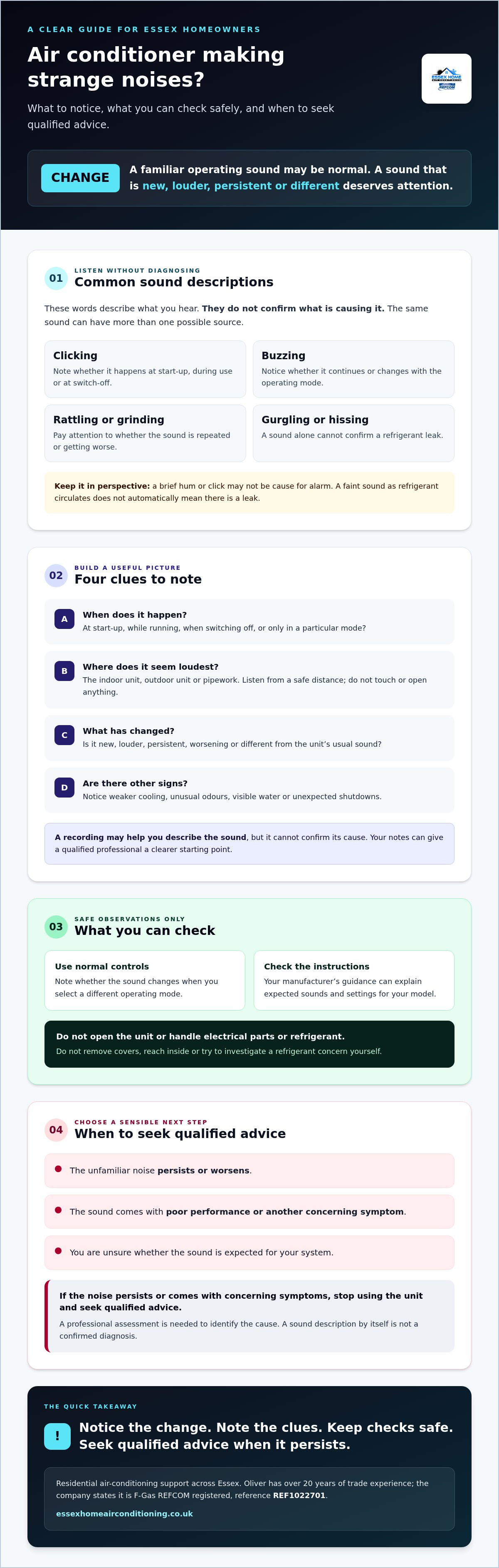
What to check safely before contacting an Essex air-conditioning specialist
You can gather useful details without taking the unit apart. If the noise is persistent or worsening, or comes with an unusual odour, visible water, poor cooling or an unexpected shutdown, stop using the air conditioner with its normal controls and seek advice. Don’t remove covers, attempt electrical work, handle refrigerant or make internal adjustments. These checks are observations only.
How can you record useful details without taking the unit apart?
Keep a short note of what you notice. If your air conditioner is making strange noises in Essex, start with this safe checklist:
Describe the sound: Is it clicking, buzzing, rattling, hissing or something else?
Note where it seems to come from: The indoor unit, outdoor unit or nearby pipework. Listen from a safe distance.
Record when it happens: Note whether it starts at start-up, continues during operation or changes with a setting.
Notice any other changes: Has cooling, airflow or normal operation changed? Is there visible water or an unusual odour?
Use only normal controls: Note whether the sound continues after you’ve used the unit as usual. Don’t repeatedly restart it if concerning symptoms are present.
Check the manufacturer’s user instructions for safe, model-specific guidance. If they advise against using the unit in the circumstances you’ve noticed, follow that advice. A recording may help you describe the sound, but it can’t confirm the cause.
What should you ask before arranging professional support?
Check that the provider works with residential air-conditioning systems and offers servicing. Ask what an assessment may involve, how any recommended work will be explained and whether you should check anything about your manufacturer warranty before proceeding. Don’t assume a particular sound means your warranty is affected.
If work involves refrigerant, ask about the engineer’s relevant F-Gas credentials and the company’s certification. Essex Home Air Conditioning states that it is F-Gas REFCOM registered, reference REF1022701. Confirm current details when making enquiries.
Clear notes can help a specialist understand what you’ve observed, but remote guidance can’t replace an assessment. If you’d like to discuss residential air-conditioning servicing, ask the Essex team for guidance.
When Essex air-conditioning servicing is the sensible next step
If a sound is persistent, getting louder or different from the unit’s usual operation, or comes with weaker cooling or another noticeable change, arranging a professional assessment is sensible. A sound description can help explain what you’ve noticed, but it can’t confirm the cause remotely. An assessment considers the noise alongside the system and its behaviour.
What can an experienced residential specialist help you understand?
Share what type of system you have, where the sound seems to come from, when it happens and whether cooling or airflow has changed. Your observations give a specialist useful context for discussing what support may be appropriate. They can’t guarantee a particular diagnosis or outcome, and servicing should not be presented as a confirmed repair.
Essex Home Air Conditioning installs residential wall-mounted split and multi-room systems and provides air-conditioning system servicing across Essex. Oliver has over 20 years of trade experience. The company states it is F-Gas REFCOM registered, reference REF1022701. If you’re considering a new system as well as trying to understand the noise, see the company’s Essex air-conditioning installation information for residential system context.
How to contact a local team without pressure
Homeowners in Basildon, Benfleet, Rayleigh, Canvey Island, Wickford, Billericay, Brentwood, Leigh-on-Sea, Southend, Maldon, Chelmsford, Burnham, Grays and nearby Essex areas can enquire about residential installation or servicing. To make the conversation useful, have the unit type, sound description and timing to hand. Mention any change in cooling or other behaviour too. If your main concern is noise in a bedroom, note when it’s most noticeable and how it affects the room. Don’t adjust or open the unit to investigate.
Essex Home Air Conditioning can discuss its residential servicing and help you understand what support may be suitable. A fault can’t be confirmed from a description alone, and no particular diagnosis or result should be assumed before an assessment. For bedroom-specific considerations, you can also look for guidance on quiet air conditioning and compare it with your own unit’s instructions.
If the noise persists or changes, contact the Essex residential air-conditioning team to describe what you’ve noticed and ask what support may be appropriate.
Take the next step towards a quieter, more comfortable home
If you’re dealing with an air conditioner making strange noises in Essex, remember that a sound alone can’t confirm a fault. Compare it with your unit’s usual behaviour, note when it happens and watch for changes in cooling, odours, visible water or unexpected shutdowns. If the noise persists, worsens or comes with other changes, seek qualified advice. Don’t open the unit or attempt internal adjustments.
Essex Home Air Conditioning focuses on residential installation and servicing across Essex. Oliver brings over 20 years of trade experience, and the company states it is F-Gas REFCOM registered, reference REF1022701. It also has a 5 Star Google Rating. These details can help you choose a local team to discuss your concern, but a sound description alone can’t establish a diagnosis or promise a particular outcome.
Share the system type, what the noise sounds like, when it occurs and any changes you’ve noticed. Contact the Essex team about your air-conditioning concern to ask what support may be suitable.
Frequently Asked Questions
Is it normal for an air conditioner to make noise?
Yes, an air conditioner makes some sound during operation, but what’s normal varies by model, settings and installation. A familiar hum or brief click may be part of your unit’s usual behaviour. Pay attention if the sound is new, louder, persistent or different from before. Check your manufacturer’s instructions for guidance specific to your model rather than relying on a universal list of normal sounds.
Why is my air conditioner making a rattling or buzzing noise?
A rattling or buzzing noise can have more than one possible explanation, so the sound alone can’t identify a fault. Note when it starts, where it seems loudest and whether cooling or airflow has changed. You can check the normal user settings and your manufacturer’s instructions, but don’t remove covers or touch electrical parts. If the noise persists, worsens or comes with other changes, seek qualified advice.
Can I keep using my air conditioner if it is making a strange noise?
It depends on whether the sound is familiar and whether anything else has changed. If it’s a new or persistent noise, cooling is reduced, there’s an unusual odour or visible water, or the unit stops unexpectedly, switch it off using the normal controls and seek advice. Don’t open the unit to investigate. If the sound is brief and familiar, compare it with the manufacturer’s instructions and monitor for changes.
Should I turn off an air conditioner that is making a grinding noise?
If you hear grinding, stop using the air conditioner with its normal controls and seek qualified advice, particularly if the noise continues or the system’s performance has changed. Grinding doesn’t confirm a particular fault, but it’s not a sound to investigate by removing covers or reaching inside. Note when it occurs and whether cooling or airflow changes. Share those observations with a professional who can advise on an assessment.
Does a strange air-conditioning noise mean there is a refrigerant leak?
No. A sound by itself can’t confirm a refrigerant leak. Refrigerant movement may make sounds during operation, while unusual or persistent noise needs to be considered alongside the system’s behaviour and the manufacturer’s guidance. Don’t handle refrigerant or attempt an internal check. If the sound continues, gets worse or comes with reduced cooling, stop using the unit if you’re concerned and ask a qualified professional for advice.
Can air-conditioning servicing help with a noisy home unit?
Servicing can be a sensible next step when a home unit’s sound is persistent or has changed, but the cause can’t be confirmed from the noise alone. A specialist needs to consider your system and the details you’ve noticed. Essex Home Air Conditioning provides residential air-conditioning system servicing in Essex. Ask what its servicing covers and whether an assessment is appropriate for your concern.
Who should I contact about a noisy air conditioner in Essex?
Contact a qualified provider that works with residential air-conditioning systems and offers servicing. Essex Home Air Conditioning serves homeowners across Essex, including Basildon, Benfleet, Rayleigh, Canvey Island, Wickford, Billericay, Brentwood, Leigh-on-Sea, Southend, Maldon, Chelmsford, Burnham and Grays. The company states it is F-Gas REFCOM registered, reference REF1022701. When you enquire, describe the unit, the sound, when it occurs and any change in performance. A description can guide the conversation, but it can’t confirm the cause remotely.

Comments