


Air Conditioning for Period Homes: 2026 Essex Guide

Can you really stay cool in an Essex manor or a Victorian terrace without turning your heritage home into a cluttered building site? Most homeowners in our county feel they have to choose between sweltering summer nights and the "crime" of bolting plastic trunking across original brickwork. It’s a genuine worry. You don’t want to fall foul of local planning departments in places like Billericay or Brentwood, nor do you want to damage the solid walls that have stood for a century.
We agree that your home’s history is its greatest asset. This guide shows you that installing air conditioning for period properties doesn't have to be a compromise. It’s possible to achieve a perfectly chilled interior while keeping every original cornice and flint wall intact. We will explain the latest 2026 F-Gas compliant systems and the specific planning rules for Essex conservation areas. You'll discover how "invisible engineering" and tidy fitting methods preserve heritage value while delivering modern comfort. We’ll cover everything from discreet split systems to the legal essentials of listed building consent.
Table of Contents
The Unique Challenge of Cooling Period Properties in Essex
Victorian and Georgian homes define much of the Essex landscape, from the grand terraces of Chelmsford to the quaint cottages of Billericay. These buildings were designed to keep warmth in, using thick, solid brick walls to battle damp British winters. However, our climate has changed. Modern heatwaves turn these historic strengths into significant weaknesses. If you are considering air conditioning for period properties, you're usually trying to solve the "thermal mass" problem. Unlike modern cavity walls, solid masonry absorbs solar energy all day and releases it slowly after sunset. This means your home stays uncomfortably hot long into the night, even when the outside air has cooled down.
Balancing a modern lifestyle with a historic structure is a delicate task. You want to sleep in a cool room, but you don't want to compromise the building's fabric. We often talk about "comfort cooling" rather than just air conditioning. Comfort cooling is a domestic approach focused on maintaining a steady, healthy environment. It’s about removing humidity and lowering the temperature just enough to make a room liveable, without the aggressive, noisy blast of air associated with commercial systems. It’s a subtle solution for a sophisticated home.
Why Traditional Ventilation Often Fails in Summer
Original sash windows and historic joinery are beautiful, but they aren't efficient climate control tools. Opening a window during a 30-degree afternoon often does more harm than good by letting in hot, humid air. This is particularly noticeable in loft conversions. Many Essex homeowners have expanded upwards, creating stunning master suites that unfortunately act as heat traps. Because heat rises and becomes stuck under the roof, these rooms become almost unusable in July and August. Standard floor fans are a common fallback, but they simply circulate the existing hot air. They don't provide the relief needed for a restorative night's sleep.
Preserving the Aesthetic Value of Your Essex Home
Your home is likely your most valuable asset, both financially and emotionally. Installing modern technology shouldn't mean sacrificing ornate cornices, ceiling roses, or delicate wall panelling. A "standard" installation often relies on ugly plastic trunking and intrusive drilling, which is why many owners of historic homes are hesitant. Protecting these features requires a methodical approach that respects the guidance of bodies like the Institute of Historic Building Conservation (IHBC). We believe in doing the job correctly, ensuring that any intervention is as tidy and discreet as possible. If you want to understand more about how we approach these bespoke projects, our Residential Air Conditioning Specialist Essex: Your 2026 Homeowner’s Guide provides a deeper look at our local expertise. We treat your heritage features with the same care you do, ensuring the end result is a quiet, comfortable environment that looks as good as it feels.
Technical Obstacles: Navigating Solid Walls and Historic Joinery
Period homes in Essex, from the Georgian townhouses of Colchester to Victorian terraces in Chelmsford, present physical hurdles that a modern build simply doesn't. The primary difference lies in the construction of the walls. Most homes built before the mid-20th century utilise solid masonry rather than modern cavity walls. This has a direct impact on how we install air conditioning for period properties. Core drilling through nine inches of solid, historic brickwork requires specialised diamond-tipped equipment and a steady hand. It isn't just about making a hole; it's about ensuring the masonry doesn't splinter or crack on the external face, preserving the kerb appeal of your home.
Room volume is another critical factor. The high ceilings that make period rooms feel so grand also mean there is a much larger volume of air to cool. We have to calculate the capacity of the system with precision. If the unit is underpowered, it will run constantly and increase your energy bills. If it's overpowered, it will cycle on and off too quickly, failing to remove humidity effectively. We follow the principles found in Historic England's technical advice, which emphasises non-destructive installation and the protection of the building's original character.
Routing Pipework Discreetly
In a modern home, hiding pipework is easy. You simply run it behind a plasterboard stud wall. In a period property, we don't have that luxury. We have to get creative. We often look for existing voids, such as redundant chimney flues or the spaces beneath original floorboards, to hide refrigerant lines and data cables. When we must run pipework externally, we use bespoke trunking that is colour-matched to your specific brickwork or lime mortar. This makes the installation almost invisible from the street. Whilst internal aesthetics are a priority, we never cut corners on drainage. Ensuring that condensate water is piped away correctly is vital to prevent damp issues in older structures.
Electrical Requirements for Older Properties
Many historic homes in Essex still have older electrical systems. Before any work begins, we assess your consumer unit to ensure it can safely handle the load of a new split system. We don't believe in "making do" with existing circuits if they aren't up to modern safety standards. Tidy, compliant wiring is just as important as the AC unit itself. We aim for a finish where all cabling is tucked away neatly, respecting the lines of your architecture. For a deeper look at the units we use, you might find our Wall Mounted Air Conditioning for Homes: 2026 Guide helpful. If you aren't sure if your current electrics are ready, you can book a local site survey with our team to get a clear, professional assessment.
Planning Permission and Conservation Areas: The Essex Landscape
Navigating the planning landscape in Essex isn't a one-size-fits-all task. Each local authority, from Chelmsford City Council to the Southend-on-Sea Borough Council, has its own nuances regarding historic preservation. If you own a period home, the first thing to establish is whether you live in a Conservation Area or if your property is actually a Listed Building. This distinction dictates your legal obligations. Whilst many homeowners assume that air conditioning for period properties is strictly forbidden, the reality is usually about finding a compliant, discreet way to install it.
For most unlisted houses in Essex, installing a single air conditioning unit is often considered "Permitted Development." This means you don't always need formal planning permission, provided the unit is placed at the rear or side and isn't overly large. However, if you live in a terraced street in Leigh-on-Sea or a semi-detached Victorian villa in Brentwood, "Noise Nuisance" regulations become vital. Modern units are incredibly quiet, but local councils still look for installations that won't disturb your neighbours. We ensure every install meets these local standards, giving you peace of mind that your system is both legal and considerate.
Listed Building Consent vs. Conservation Area Rules
If your home is Grade II listed, the rules change. You will almost certainly need Listed Building Consent for any external or internal alterations. This includes drilling through original masonry or mounting a condenser on an external wall. Planning officers look for "reversible" installations that don't permanently damage the building's fabric. We recommend following the official guidance on installing new services, which suggests minimising the impact on historic materials. In Conservation Areas like Billericay or Great Dunmow, the focus is more on the "visual amenity" of the street. If the unit can't be seen from the road, your chances of approval are much higher.
External Unit Placement Strategies
The secret to a successful planning application is a "hidden" placement strategy. We don't just bolt units to the front of a house. We look for flat roofs, tucked-away garden spots, or areas behind parapet walls where the condenser is shielded from view. For those in specific local pockets, our Air Conditioning Installation Billericay: The Homeowner’s 2026 Guide offers detailed advice on local planning trends. We also use colour-matched trunking to ensure any visible pipework blends perfectly with your lime wash or red Essex brick. It’s about doing the job the right way, ensuring your home stays cool without a single letter of complaint from the council.

Discreet Air Conditioning Solutions for Traditional Interiors
The most common concern we hear from Essex homeowners isn't about the temperature; it's about the look. You don't want a bulky, industrial box clashing with your hand-painted wallpaper or original timber beams. Modern air conditioning for period properties has evolved significantly. We now utilise slimline, designer units that are engineered to be unobtrusive. These models are often less than 20cm deep, making them much easier to integrate into a traditional room than the units available just a few years ago. Silence is also a priority. High-end units now operate at decibel levels lower than a whisper, ensuring the peaceful atmosphere of a country home isn't ruined by a mechanical hum.
Wall-Mounted Units: The Practical Choice
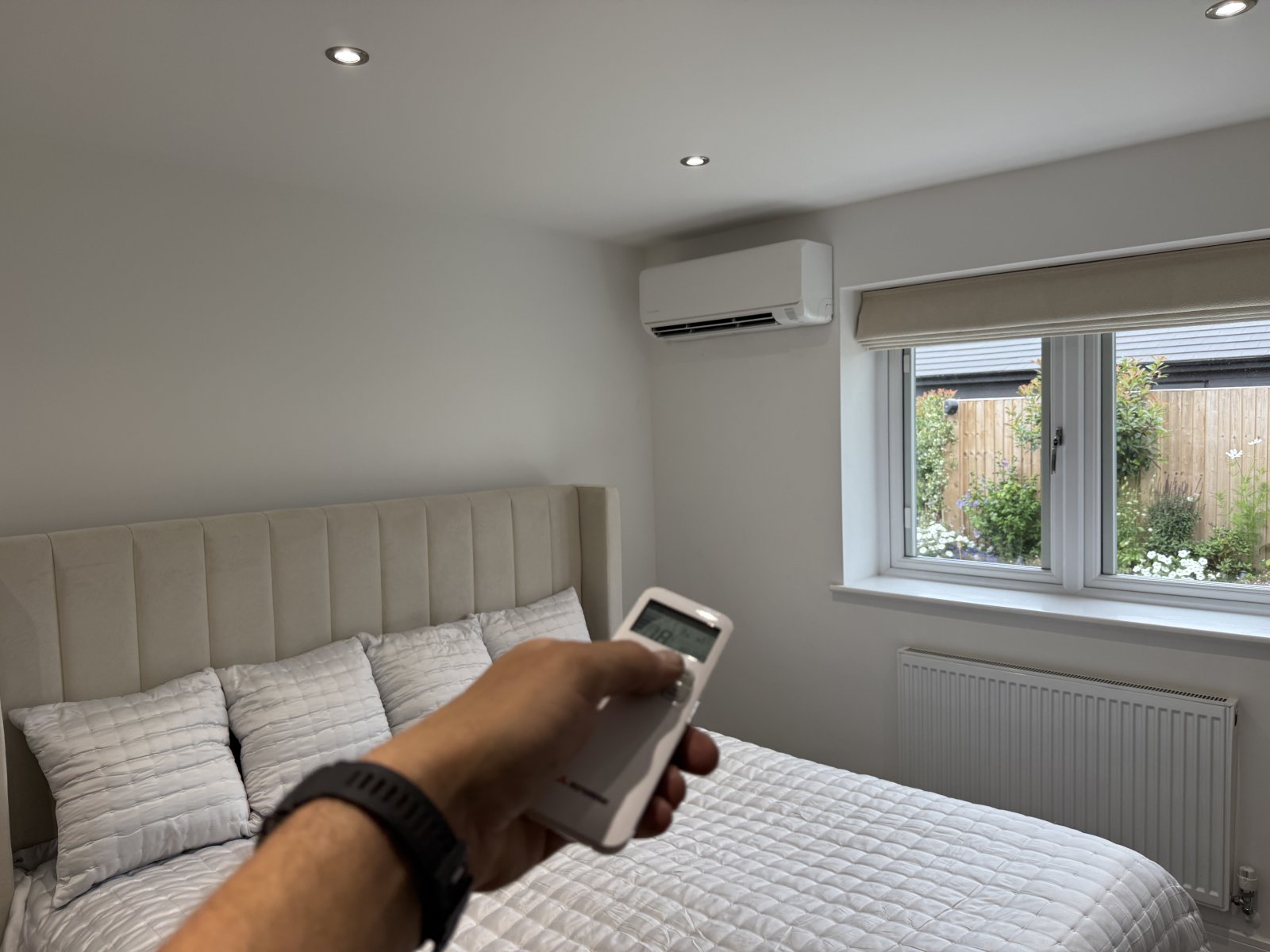
Positioning is the key to a discreet finish. We often mount units above doorways or tuck them into natural alcoves where they don't draw the eye. For premium interiors, we recommend units with matte finishes that complement heritage paint palettes, such as those from Farrow & Ball. This avoids the "cheap plastic" look of standard units. From a structural perspective, wall-mounted split systems are often safer for historic building fabrics than ducted alternatives. Ducted systems require significant ceiling voids and structural disruption that can weaken old floor joists. A split system only needs a small 65mm core-drilled hole for the refrigerant lines, which is easily sealed and entirely reversible if the property's use changes in the future.
Multi-Room Systems for Large Period Homes
For larger properties in areas like Brentwood or Chelmsford, a multi-room setup is the most efficient way to manage comfort. This allows you to cool multiple bedrooms and living spaces using just one external condenser, which preserves your home's kerb appeal. You can zone your cooling, prioritising the rooms you use most, like a master bedroom or a top-floor home office that traps the most heat. Modern inverter technology is vital for these large spaces. It allows the system to vary its output rather than simply being "on" or "off," which handles large volumes of air much more efficiently. To understand the investment required for these systems, take a look at our Multi Room Air Conditioning Cost Essex: 2026 Homeowner’s Price Guide. If you'd like to see how these units would look in your own home, contact our team to arrange a local site survey.
Professional Installation: Ensuring a Tidy Finish in Your Essex Home
When you're dealing with a Grade II listed cottage or a Victorian terrace, you need more than just a technician. You need a local specialist who understands the specific building stock of Essex. We take pride in being a "safe pair of hands" for homeowners in Billericay, Brentwood, and Chelmsford. With over 20 years of trade experience, we've seen every type of solid wall and historic ceiling imaginable. F-Gas certification isn't just a badge; it's a legal requirement for anyone handling refrigerants. In 2026, with the industry shifting towards lower Global Warming Potential (GWP) gases like R-32 and R-454B, having a certified professional is non-negotiable. It ensures your installation is valid, safe, and fully compliant with the latest environmental standards.
Our "Tidy Fitting" promise is at the heart of what we do. We know that the dust from drilling through old Essex red brick or flint can be invasive. That's why we treat your home with the respect it deserves. We don't believe in "cutting corners" to save time. Every hole is drilled with precision, and every refrigerant line is routed to minimise visual impact. It’s about more than just cooling; it's about leaving your home exactly as we found it, just much more comfortable. Choosing a local expert means you get accountability that national chains simply can't match. We live and work in the same community, so our reputation depends on every neat finish we deliver.
What to Expect During the Installation
Preparation is the most important stage of the process. We use heavy-duty dust protection for your floors and furniture before any tools are even unpacked. We handle period surfaces, such as lime-washed walls or original timber, with extreme care. Once the physical install is complete, we focus on the "clean finish." We don't leave mess behind. The final part of our visit is the handover. We’ll sit down with you to explain the controls, ensuring you know how to run your new air conditioning for period properties at peak efficiency for maximum comfort.
Long-term Maintenance for Period Property AC
Historic homes can be dustier than modern ones, which means your system's filters often work harder to keep the air clean. Annual servicing is vital to maintain airflow and energy efficiency. It also protects your manufacturer's warranty. For those living on the coast or in town centres, our Air Conditioning Servicing Southend: The 2026 Homeowner’s Maintenance Guide provides a detailed breakdown of what a professional visit involves. Regular, F-Gas certified care ensures your investment lasts for years, providing a reliable escape from the summer heat without compromising the integrity of your historic home.
Enjoy a Cooler Summer Without Compromising Your Home's Heritage
Staying comfortable in a historic Essex property doesn't have to mean choosing between modern cooling and period charm. We've shown that with the right approach, you can navigate solid wall challenges and local planning rules while keeping your original features intact. By focusing on discreet, slimline units and "invisible" pipework routing, you can maintain the aesthetic value of your home whilst enjoying a perfectly chilled environment. It’s about doing the job the right way, following F-Gas regulations, and respecting the building's fabric.
As local specialists with over 20 years of trade experience, we pride ourselves on being a safe pair of hands for your project. We are F-Gas certified and fully insured, specialising exclusively in residential installations that prioritise a tidy, professional finish. If you're ready to transform your living space into a quiet haven from the heat, we can help you find the ideal solution. Book a survey for your Essex period property today to see how we can integrate air conditioning for period properties into your home with precision and care. You deserve a home that feels as good as it looks, regardless of the temperature outside.
Frequently Asked Questions
Do I need planning permission for air conditioning in a conservation area in Essex?
Planning permission is often required in Essex conservation areas if the external unit is visible from a public highway. For properties in areas like Leigh-on-Sea or Billericay, you should seek advice from your local district or borough council. If the unit is discreetly placed at the rear or side, it may fall under permitted development. We always recommend a pre-application check to ensure your installation is fully compliant with local heritage rules.
Can I install air conditioning in a Grade II listed house?
You can install air conditioning in a Grade II listed house, but you must obtain Listed Building Consent first. Local planning officers look for non-destructive installation methods that protect the building's historic fabric. We specialise in "reversible" fittings that don't permanently alter the masonry or original joinery. Getting professional advice early ensures your application for air conditioning for period properties is presented in a way that conservation officers are likely to approve.
Will the internal units look out of place in my Victorian lounge?
Modern slimline units are designed to blend seamlessly into traditional decor. We often position internal units in natural alcoves or above doorways where they don't disrupt the room's symmetry. You can choose matte finishes that complement popular heritage paint colours, avoiding the stark look of glossy white plastic. This approach ensures your Victorian lounge stays cool without sacrificing the aesthetic charm of original cornices or ceiling roses.
How noisy are the external condensers for my neighbours?
External condensers are now incredibly quiet, often producing less noise than a domestic refrigerator. Top-tier brands have refined their fan technology to ensure neighbours aren't disturbed, even in tightly packed terraced streets. We carefully select the mounting location to minimise vibration and sound travel. This methodical placement, combined with modern sound-dampening materials, ensures your home stays comfortable whilst maintaining a peaceful environment for everyone on your street.
Is it possible to hide the pipework in a house with solid brick walls?
Hiding pipework in solid brick buildings is a specialised task that we handle with care. We look for creative routing options such as redundant chimney flues, existing floor voids, or behind decorative panelling. When external runs are unavoidable, we use bespoke trunking colour-matched to your Essex red brick or lime wash. This "invisible engineering" approach ensures the technical side of the system remains hidden, preserving the clean lines of your property's architecture.
How long does a typical installation take in a period property?
A standard single-room installation typically takes one full working day to complete. For larger projects involving multi-room air conditioning setups, you should expect the work to take between two and four days. Period homes often require a more methodical pace to ensure historic features aren't damaged during the drilling or routing process. We always provide a clear timeline after our initial site survey so you know exactly what to expect.
Can I have air conditioning in my loft conversion if it is a period home?
Loft conversions in period homes are ideal candidates for air conditioning because they naturally trap rising heat. These spaces often become uncomfortably hot during Essex summers, regardless of how much insulation is used. We can install compact, wall-mounted units that fit neatly under sloping eaves or within dormer windows. This provides a practical solution for master suites or home offices, turning a stifling heat trap into a usable, chilled living space.
Are modern air conditioning units energy efficient for large, old rooms?
Modern A-rated air conditioning for period properties is highly efficient, even in rooms with high ceilings. Inverter technology allows the system to adjust its power output based on the room's temperature, rather than running at full capacity constantly. This handles the large air volumes of traditional rooms without wasting energy. A typical system costs between 10p and 50p per hour to run, providing a cost-effective way to manage the "thermal mass" of solid walls.

Comments