


Alternatives to Portable Air Conditioners in Southend: Which Option Suits Your Home?

If a portable unit is awkward to position or its window hose gets in the way, there are practical alternatives to portable air conditioners Southend homeowners can consider. The best fit depends on whether you need occasional relief, want to reduce heat build-up or need regular cooling in a room you use often.
This guide compares fans, air coolers and fixed split systems, including what to consider before choosing an option for a bedroom, home office or living room. A fixed system may be more suitable when portable cooling is inconvenient or you want heating as well as cooling. Its design depends on more than floor area: room volume, glazing, insulation, orientation, occupancy and heat load all matter. Essex Home Air Conditioning installs domestic split systems and is F-Gas REFCOM registered.
Table of Contents
Alternatives to portable air conditioners in Southend: what problem are you solving?
Portable units, air coolers and split systems: compare the alternatives
Choosing an alternative for a Southend home: rooms, layout and fitting
A lasting alternative in Southend: when to consider a split-system quotation
Alternatives to portable air conditioners in Southend: what problem are you solving?
A portable unit can help with occasional cooling, but it may not suit the room, your routine or how long you need a solution. The hose needs a suitable window opening, the unit occupies floor space, and moving it between rooms can be inconvenient. When comparing alternatives to portable air conditioners Southend homeowners can consider, start by deciding whether you need temporary spot cooling, ways to limit heat build-up or installed cooling for rooms you use regularly.
A portable unit is a self-contained appliance that can be moved and vented through a window. A fixed split system has indoor and outdoor units installed as part of the home. For a plain-English overview of types of air conditioning systems, see Wikipedia. Modern split air conditioning can provide heating as well as cooling, so it can be useful beyond summer. Essex Home Air Conditioning installs domestic split systems in Southend and is F-Gas REFCOM registered.
When does a portable unit stop being the right fit?
Think about your day-to-day routine as well as the cooling. Is there a suitable window for the hose? Will the unit obstruct furniture or need moving between rooms? A portable model may suit occasional use in one space. If you regularly need cooling in a bedroom or home office, compare it with a fixed installation that stays in place. Consider the noise, floor space and window access before deciding which trade-offs you can live with.
Which Southend home-cooling alternatives are worth comparing?
Fans move air around you, but do not refrigerate a room. Shading and well-timed ventilation can help limit heat entering or building up indoors, but they do not actively cool the room. Air coolers use water to affect the air passing through them, which is different from air conditioning. A split system provides installed, room-by-room cooling. Its suitability depends on room volume, glazing, insulation, orientation, occupancy and heat load, not floor area alone.
Portable units, air coolers and split systems: compare the alternatives
Each option works differently, so compare its function as well as how it fits your home. A fan circulates air, an air cooler uses water to affect the air passing through it, and an air conditioner transfers heat out of a room. They also differ in setup, coverage and usefulness beyond summer.
Fan: Needs no fixed installation and is easy to move. It circulates air where you use it, but does not refrigerate the room or provide heating.
Air cooler: Portable and generally needs no fixed installation or window hose. It uses water to cool airflow rather than working like an air conditioner. It does not provide heating.
Portable unit: Can be moved between rooms, but usually needs a hose vented through a window. It typically cools one space at a time. Heating depends on the model.
Fixed split system: Professionally installed indoor and outdoor units are selected and positioned for the room or rooms in the plan. The system stays in place, and modern models can also provide heating.
How do fans and air coolers differ from air conditioning?
A fan moves air around you, while an air cooler uses water to affect the airflow. Neither works like air conditioning, which transfers heat from indoors to outside. If you mainly want air movement, a fan may be enough. If you want to reduce the room temperature, compare active cooling options and think about how often you use the space. An air cooler is not a direct substitute for a split system.
What changes when you choose a fixed split system?
A split system has indoor and outdoor components connected as part of a professionally planned installation. The system is designed around the room or rooms you want to cool, then remains in place rather than being moved around the home. A multi-room setup can serve several rooms, while a single-room installation focuses on one space.
A portable unit’s hose vents warm air outside, but the window opening can also let warm air back into the room. This is the portable unit efficiency flaw. If the hose, floor space or room-to-room moving has become a regular frustration, a fixed system may be a more practical alternative. Explore domestic split-system installation for your home.
Choosing an alternative for a Southend home: rooms, layout and fitting
Start with the spaces that cause the most discomfort, then consider how you use each one. A bedroom used overnight, a living room occupied in the evening and a home office used during the day can have different cooling needs. Note whether you want occasional relief or a solution that stays in place. Furniture, window access and the appearance of the property can also affect where equipment might go. These details make a more useful starting point than choosing a system by floor area alone.
List the rooms: Write down the spaces you want to cool and which matter most.
Note when they’re used: Identify whether you need cooling during the day, overnight or only occasionally.
Consider the layout: Think about possible indoor-unit positions, furniture and practical constraints around the home.
Decide how lasting a solution you want: Temporary measures and fixed cooling suit different routines.
What should you consider in a Southend bedroom or living space?
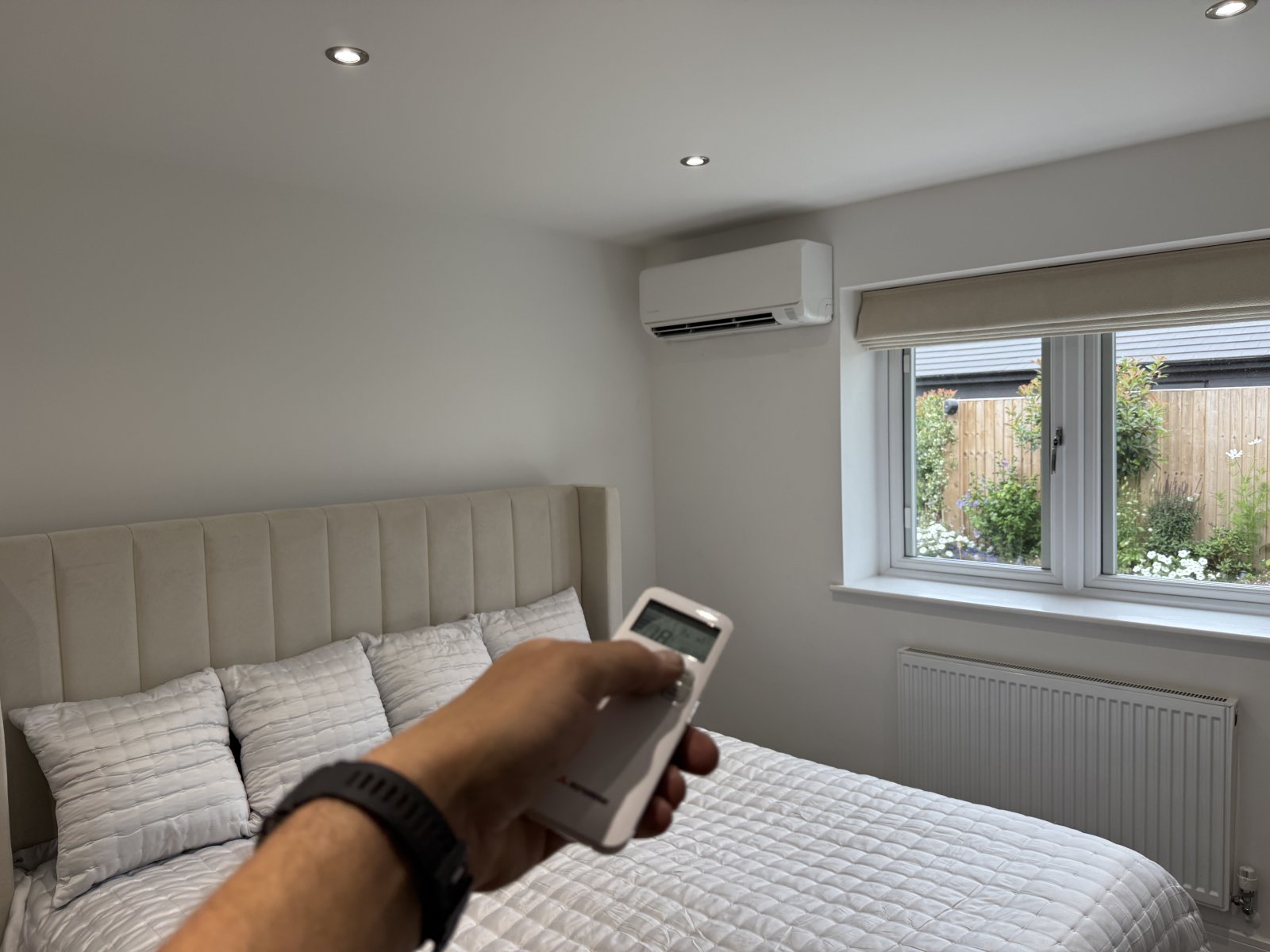
In a bedroom, consider whether the airflow could point directly at the bed and whether the sound would disturb you while sleeping. In a living room, think about seating and whether furniture could block airflow. Some systems may use the Coanda effect to direct air along the ceiling, but this depends on the unit selected. Discuss airflow direction and indoor-unit position as part of the system design.
What does a tidy, compliant installation involve?
A home assessment helps shape the system design, unit positions and installation plan. Correct sizing considers room volume, glazing, insulation, orientation, occupancy and heat load, not floor area alone. The indoor and outdoor units also need positions that work for the property. Essex Home Air Conditioning installs residential systems across Essex, including Southend, Basildon, Benfleet, Rayleigh, Canvey Island, Wickford, Billericay, Brentwood, Leigh-on-Sea, Maldon, Chelmsford, Burnham and Grays. For more context on planning a home system, see the residential air-conditioning guide.
A lasting alternative in Southend: when to consider a split-system quotation
Temporary measures may be enough if you only need occasional relief. If you use portable cooling regularly in a bedroom, home office or living space, a fixed system may be worth considering. A single-room installation focuses on one space, while a multi-room setup is planned for several. The right approach depends on your home, the rooms you want to cool and how you use them.
Essex Home Air Conditioning provides residential installation and servicing across Essex, including Southend, and brings over 20 years of trade experience. A quotation is an opportunity to explain what you need and discuss a suitable system design, including the positions of indoor and outdoor units.
What information helps shape a home-cooling quotation?
Share which rooms you have in mind, how often you use them and any relevant details about the layout, glazing and insulation. Photos can help show the spaces and possible unit positions. If you are deciding between cooling one room and planning a wider home setup, the residential air-conditioning guide provides further context.
How can a local installer help with the next step?
A local installation team can discuss your priorities and explain how a proposed setup could work in your property. Essex Home Air Conditioning focuses on domestic installation and servicing, helping Southend homeowners plan a fixed alternative around the rooms and routine that matter to them.
When comparing fixed cooling with portable options, consider how often you use the room, whether the hose and unit are getting in the way, and whether heating as well as cooling would be useful.
Make your next cooling decision with confidence
Before settling on a permanent system, consider how you want your home to feel during the warmest parts of your usual day. Which rooms matter most? Would you value cooling in one space or across several? Your answers help shape a design around your priorities, rather than starting with equipment.
As you weigh the alternatives to portable air conditioners Southend homeowners have available, keep a brief note of when a room becomes uncomfortable and how you use it. This gives the installer useful context for discussing the design and possible unit positions. You do not need a technical plan. A clear idea of what is not working is a useful starting point.
Essex Home Air Conditioning can discuss a home system with you and plan a residential installation around your property and intended use.
A considered plan can make choosing a cooling solution for your home simpler.
Frequently Asked Questions
Can I install a split air conditioner in a rented home in Southend?
Get your landlord’s written permission before arranging a fixed system. Installation involves fitting indoor and outdoor equipment and making connections through the building, so agree the proposed positions and any expectations about reinstating the property in advance. Check your tenancy agreement too. If permission is not practical, movable cooling options may be easier while you rent. This is a sensible first step when weighing alternatives to portable air conditioners Southend residents can use.
Does a split air conditioner need an outdoor unit?
Yes. A conventional split air conditioner has an indoor unit and an outdoor unit linked as part of the system. During cooling, the outdoor unit helps transfer heat away from the room. Its position depends on the property and installation layout, so consider practical access and where it could sit before deciding. A portable unit works differently and does not use this split arrangement.
Can a home air conditioner be used for heating as well as cooling?
Yes, modern split air-conditioning systems can provide heating as well as cooling. They work as an air-to-air heat pump, moving heat between outdoor and indoor air. This can make a fixed system useful beyond the warmer months, though the right design depends on the home and how you plan to use it. Check the specific system’s controls and heating function when comparing options.
Does a home air-conditioning system need servicing?
Yes. Regular servicing helps keep a home system clean and allows its condition to be checked. Follow the manufacturer’s guidance for maintenance, and clean or check user-accessible filters as instructed. A professional service can inspect parts that are not intended for homeowner maintenance. Work involving refrigerant should be handled by a suitably F-Gas-certified company to support compliant servicing.

Comments