


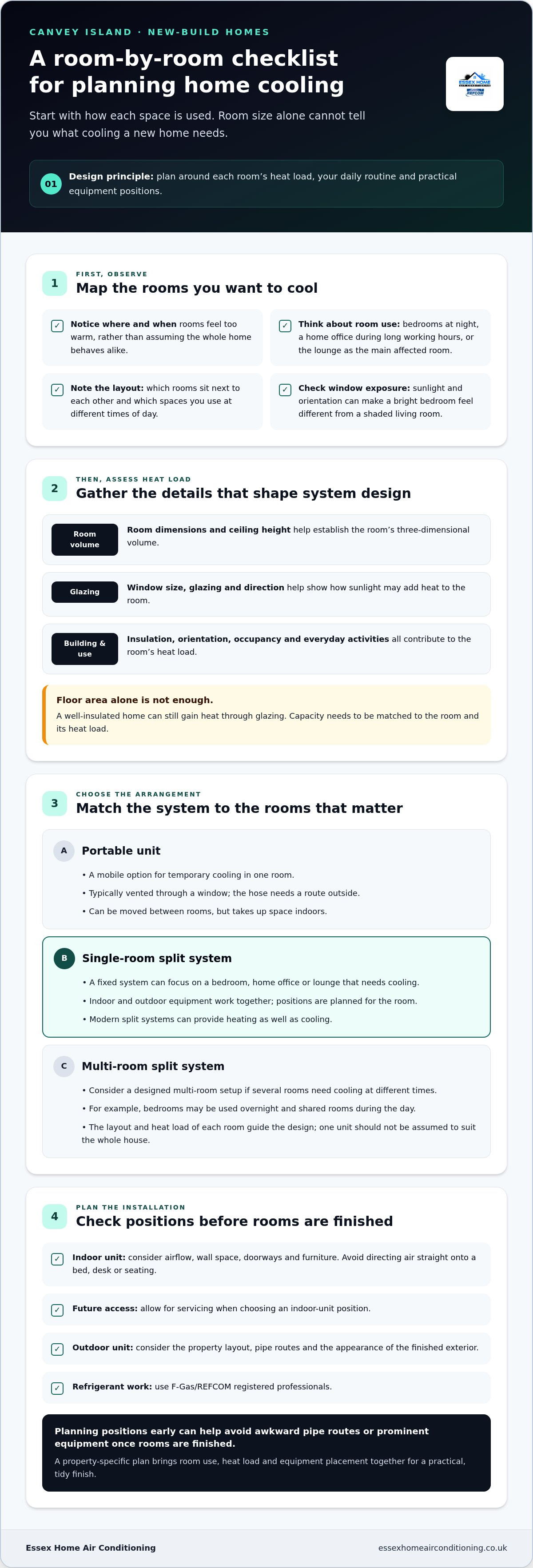
Cooling a new-build property in Canvey Island: choose the right system

What if the rooms that need cooling most aren’t the largest ones? When planning cooling a new build property Canvey Island homeowners should consider layout, glazing and insulation as well as floor area. A bright bedroom, for example, may have a different heat load from a shaded living room.
It’s natural to ask whether one unit will be enough, how many rooms need cooling and where equipment can go without disrupting the finished look. The right setup depends on how you use each space and how heat builds up in your home, not just the property’s overall size.
This guide compares single-room and multi-room split systems, explains what shapes a tailored design and outlines what to plan before installation. Essex Home Air Conditioning installs domestic systems in Canvey Island and across Essex, with equipment positions planned around your home. Modern split systems can provide heating as well as cooling. Refrigerant work is handled by F-Gas/REFCOM registered professionals.
Table of Contents
Why plan cooling for a new-build property in Canvey Island?
Moving into a new home doesn’t mean every room will feel the same. A bedroom with large windows may warm up differently from a shaded living room. Cooking, working from home and the hours you spend in each space also affect comfort. A plan for cooling a new build property Canvey Island should start with how you use each room, rather than assuming one system will suit the whole house.
Home cooling means controlling indoor temperature with equipment suited to the property and the rooms you want to keep comfortable. Planning equipment positions early can help avoid awkward pipe routes or prominent equipment after the rooms are finished, while supporting a tidy finish. Building decisions sit within a wider framework of building regulation; this general overview explains the term, rather than setting out specific air-conditioning requirements.
A new-build cooling plan should reflect each room’s heat load, not the age of the property. Insulation slows heat transfer, but it doesn’t prevent warmth entering through windows.
Can a well-insulated new home still need cooling?
Yes. Sunlight through glazing can add heat, and the effect depends on window exposure and orientation. Occupancy matters too: a room used by several people during the day may feel different from a spare bedroom used occasionally. There’s no single pattern for every home, so note where and when you feel too warm.
What makes a Canvey Island home’s layout relevant?
In Canvey Island, use your own floor plan rather than assuming every local home has the same cooling needs. Note which rooms are next to each other, which windows receive direct sun and where indoor units could serve the spaces you use. Think about practical positions for outdoor equipment too. These details help shape a system around your home and daily routine.
Portable unit or split-system air conditioning: what suits a new home?
A portable unit can provide temporary cooling for one room. For planned, regular home cooling, a professionally installed split system is another option: indoor and outdoor equipment work together as a fixed system. Your choice depends on how often you need cooling, which rooms matter and how much heat each room gains. The government’s Approved Document O: Overheating covers overheating guidance for new buildings.
Portable unitA mobile, self-contained appliance, typically vented through a window. You can move it between rooms, but the hose needs a route outside and the appliance takes up space indoors.
Split systemA fixed indoor unit works with an outdoor unit. It is designed for the room or rooms in the system, with equipment positions planned as part of the installation.
A split-system capacity is its cooling power. Matching it to the room’s heat load matters: a poorly matched system may not deliver the comfort you expect. Room volume, glazing, insulation, orientation and occupancy all help inform the design. Essex Home Air Conditioning installs wall mounted air conditioning for homes, with system design tailored to the property.
When might a single-room split system make sense?
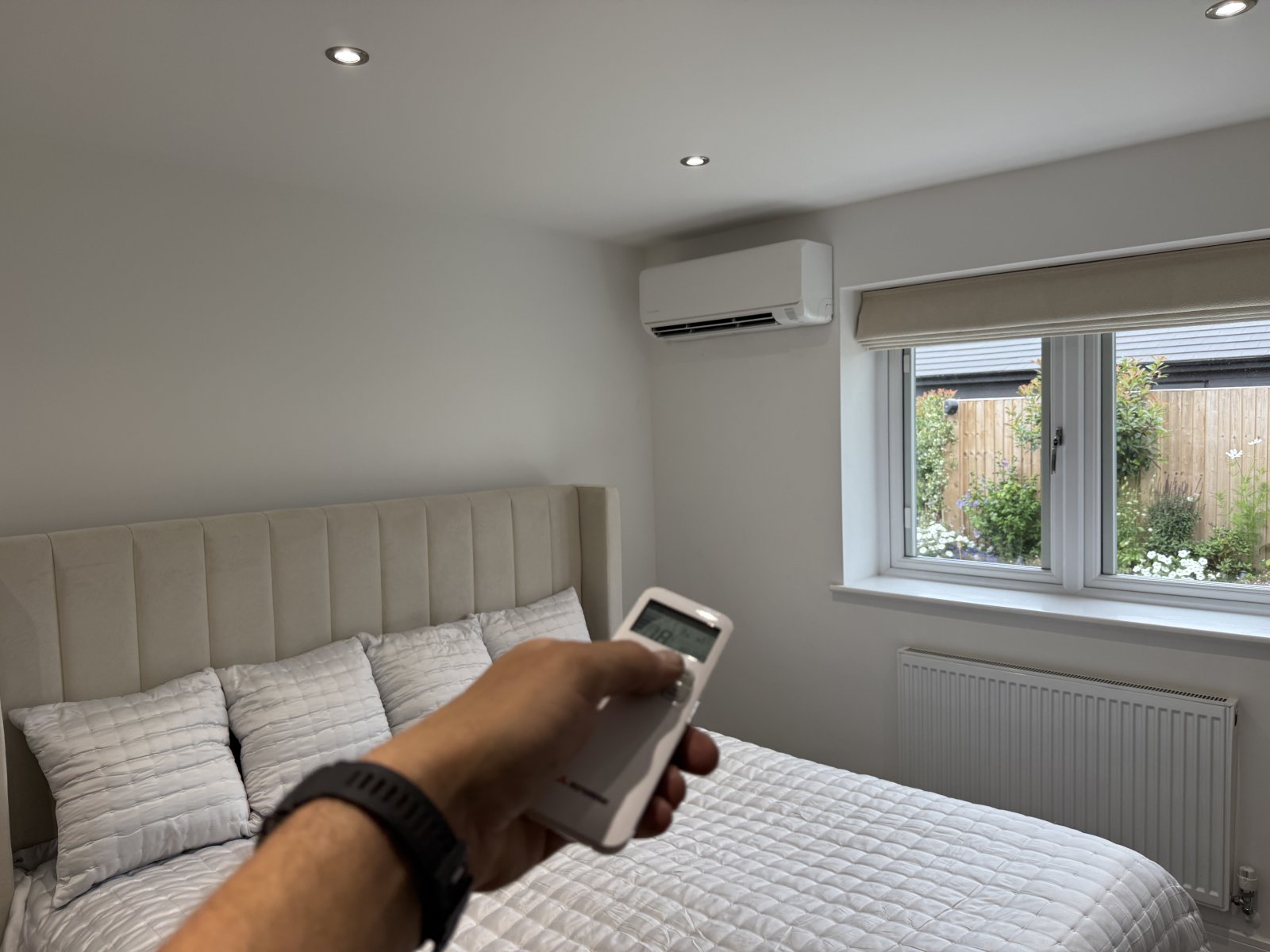
If a bedroom is uncomfortable at night or you spend long hours working in a warm home office, a single-room system focuses cooling where it’s needed. This approach may also suit a lounge if it’s the main room affected. System sizing based on room volume considers the room’s three-dimensional space, alongside glazing and other heat-load factors. It’s more useful than relying on floor area alone.
When should a homeowner consider multi-room cooling?
If several rooms need cooling at different times, a designed multi-room setup can serve more than one space. This could suit a household that wants comfortable bedrooms overnight and cooler shared rooms during the day. The layout and heat load of each room guide the design. It isn’t simply a matter of choosing one unit for the whole house.
How glazing, insulation and room layout shape cooling design
Cooling design starts with the heat entering and building up in each room. Glazing can admit solar heat, while insulation affects how quickly heat moves through the building fabric. Orientation influences how sunlight reaches a room; people and everyday activities add to its heat load. That’s why floor area alone can’t establish the right split-system capacity.
For cooling a new build property Canvey Island, system sizing based on room volume considers the room’s three-dimensional space alongside the property’s other heat-load factors. The aim is to match equipment to the rooms you want to cool, rather than assume every space has the same needs. For broader advice on energy-efficient home cooling, consider how system design and your use of each room work together.
What information helps size a system properly?
Gather details about the room and how it behaves. A tailored assessment considers them together, rather than relying on a single measurement.
Room dimensions and ceiling height, which help establish room volume.
Window size and glazing, including which direction the windows face.
Insulation and the room’s orientation.
Typical occupancy and how the room is used throughout the day.
Where can indoor and outdoor units go?
Indoor-unit position affects how air moves around the room. Consider whether airflow can reach the occupied area without blowing directly onto a bed, desk or seating. Wall space, doorways and furniture matter, as does access for future servicing. These choices help keep the equipment practical and preserve the finished room’s appearance.
Outdoor-unit placement needs equal care. Its position should suit the property layout and installation design, with pipe routes and the appearance of the finished exterior considered as part of the plan. Essex Home Air Conditioning designs residential split systems around the rooms and layout of your home.
Planning a compliant air-conditioning installation in Canvey Island
A clear plan turns your comfort needs into a system that suits the property. For cooling a new build property Canvey Island, start with the rooms you want to cool, then consider the home’s layout and where equipment can be fitted neatly.
What should you prepare before requesting a quotation?
List the rooms you want cooled and how you use them, such as for sleeping, working or relaxing. Details about glazing, insulation and preferred positions for indoor and outdoor equipment help shape a proposal around your home. Room dimensions and ceiling height are useful too, but system design should consider the full heat load, not floor area alone.
What does professional fitting involve?
Installation follows the agreed design. Indoor and outdoor unit positions are planned, pipework routes are set out, and the equipment is fitted and checked. Refrigerant work must be handled by appropriately qualified professionals. Essex Home Air Conditioning is F-Gas/REFCOM registered and installs residential wall-mounted split and multi-room systems in Canvey Island and across Essex. The company brings over 20 years of trade experience to domestic installations.
Planning equipment locations and pipe routes together can help avoid a last-minute layout that detracts from finished rooms. You can read more about air-conditioning installation across Essex and the approach to domestic fitting.
Share the rooms you have in mind and details of your new home to request a project quotation. It’s a straightforward starting point for planning an installation around the property.
Make your cooling plan part of settling in
Before choosing equipment, think about how your household may use the home through the seasons. A bedroom that needs cooling overnight, for example, may take priority over a room used only occasionally. Keeping those priorities clear helps guide a design that suits your routine as well as the building. A tailored plan for cooling a new build property in Canvey Island starts with the spaces that matter most to you.
You don’t need to have every technical detail worked out before taking the next step. A list of the rooms you want to cool, how you use them and any preferred equipment positions gives a useful starting point for a project discussion. Essex Home Air Conditioning serves homeowners in Canvey Island and across Essex, including Basildon, Benfleet, Rayleigh, Wickford, Billericay, Brentwood, Leigh-on-Sea, Southend, Maldon, Chelmsford, Burnham and Grays. From there, the installation can be planned around your home rather than treated as an afterthought.
With a clear plan in place, you can move towards a home that feels comfortable and considered from the start.
Frequently Asked Questions
Can a new-build property still get too warm in summer?
Yes. A new-build can still feel too warm, particularly in rooms that receive strong sunlight or are used for long periods. For cooling a new build property in Canvey Island, consider whether a bedroom, home office or conservatory is uncomfortable at the times you need it most. Keeping a short note of which rooms warm up, and when, can make an assessment more useful.
Is a split air-conditioning system better than a portable unit for a new-build home?
Neither option suits every situation. A portable unit may work for occasional cooling and can be moved between rooms, though its window hose needs a suitable route outside. A split system is a permanent installation, so it may suit regular cooling in one room or several spaces. Think about how often you’ll use the equipment and whether you want a fixed system.
Can home air conditioning provide heating as well as cooling?
Yes. Modern split air conditioning can provide heating as well as cooling when configured as an air-to-air heat pump. This can be useful if you want one system to help condition a bedroom in summer and provide warmth during cooler periods. Consider which rooms need both functions and how they fit into your existing heating arrangements, so the proposed setup reflects how your household uses the home.
How is the right air-conditioning size chosen for a new-build property?
The right split-system capacity is chosen by assessing the room’s heat load, not floor area alone. Room height, window exposure, insulation and how many people usually occupy the space all matter. For example, two rooms with the same floor area may have different cooling needs if one has more glazing or is used by more people. A room-by-room assessment helps avoid relying on a simple rule of thumb.
Does air-conditioning installation need to be F-Gas compliant?
Work involving refrigerant should follow applicable F-Gas requirements and be handled by an appropriately qualified professional. For a home installation in Canvey Island, consider compliance alongside equipment positions, pipe routes and the finished appearance. Planning these details together helps ensure the installation suits your home, rather than treating refrigerant work or the tidy finish as an afterthought.

Comments