


Future-proofing your home against heat in Basildon: practical steps for homeowners

What does future-proofing your home against heat Basildon involve, and why might the first step not be buying a cooling unit? Start by noticing which rooms warm up, when they do so and what might be adding to the heat. Shading windows, managing ventilation and adjusting household routines can all help, but the right combination depends on your rooms and how you use them.
It’s reasonable to wonder whether installed cooling will be noisy, disruptive or costly to run. This guide explains how practical changes to your home can work alongside a professionally installed split system, which provides both cooling and heating as an air-to-air heat pump. You’ll learn how to prioritise measures, compare passive cooling with installed air conditioning and gather useful details for a system plan. Essex Home Air Conditioning is based in Basildon and installs domestic systems across Essex, designing each setup around the property rather than choosing equipment by floor area alone.
Table of Contents
Future-proofing your home against heat Basildon: where indoor warmth comes from
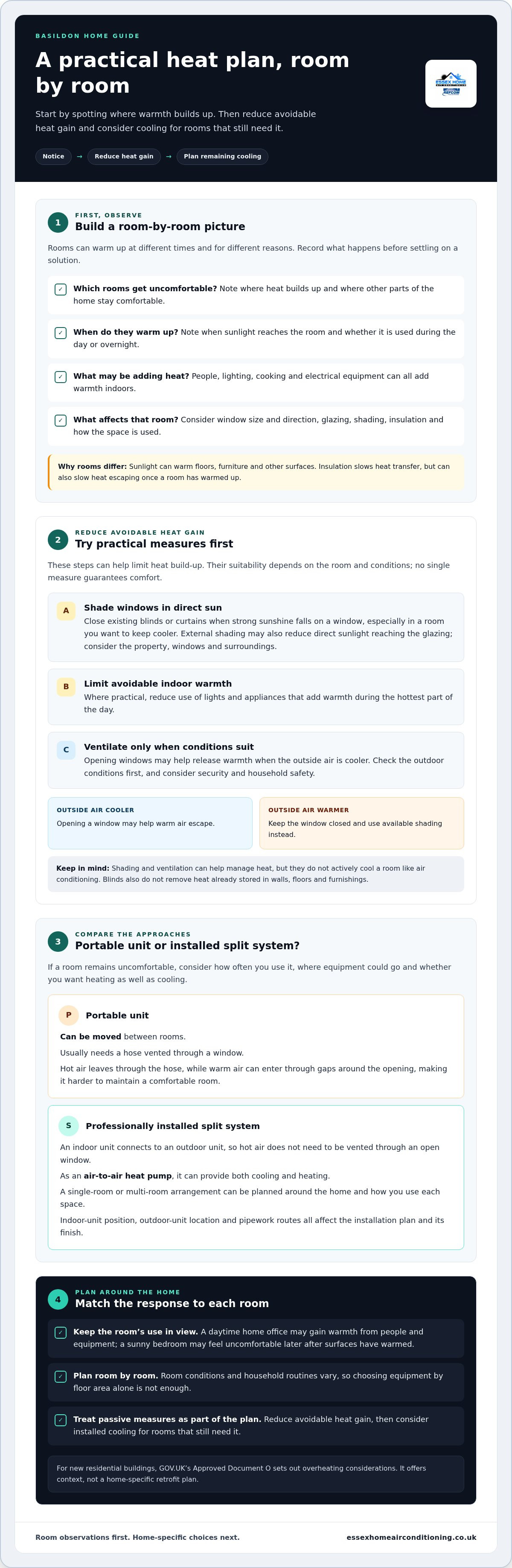
Hot rooms can make it harder to sleep, work or relax, particularly when one part of the house feels stuffy while another stays comfortable. A practical plan starts with identifying where heat builds up, reducing avoidable heat gain and then considering suitable cooling for the demand that remains. That’s the basis of future-proofing your home against heat Basildon: adapt the home as well as planning any equipment.
Sunlight through windows can warm floors, furniture and other surfaces. Insulation slows heat transfer through the building, but it can also slow heat escaping after a room has warmed up. People, lighting, cooking and electrical equipment add indoor heat. Ventilation may help remove warmth when the air outside is cooler, while opening windows during hotter conditions can bring more warm air in. Passive Cooling Strategies covers approaches that limit heat gain and help dissipate it.
Why some rooms become uncomfortable before others
Rooms respond differently to heat. The size and direction of windows affect how much direct sun enters, while insulation and shading influence how quickly a room warms or cools. How you use a room matters too. A home office used during the day can gain heat from people and equipment, while a sunny bedroom may feel uncomfortable later, after sunlight has warmed its surfaces. Make a note of when each room gets warm and how you use it. These details help you decide where to focus first.
Start with the home, not a single cooling product
There isn’t one change that suits every Basildon property. Begin by noting which rooms warm up, when sunlight reaches them and whether you use them in the daytime or overnight. Then consider practical ways to limit heat build-up, alongside professionally planned cooling for rooms that still need it. A room-by-room approach is more useful than choosing equipment by floor area alone, because room conditions and household routines vary.
Passive heat reduction in Basildon homes: shade, ventilation and sensible routines
Small changes can help limit how much warmth builds up, though no single measure suits every room or guarantees comfort. For future-proofing your home against heat Basildon, start with simple steps, then consider whether rooms that remain uncomfortable need more than passive measures.
Use existing blinds or curtains: Close them when strong sunshine falls directly on a window, especially in rooms you want to keep cooler.
Reduce avoidable indoor heat: Where practical, limit the use of lights and appliances that add warmth during the hottest part of the day.
Review window shading: External shading may reduce direct sunlight reaching the glazing. Its suitability depends on the property, windows and surroundings.
Ventilate according to conditions: Opening windows may help release warmth when the outside air is cooler. Consider security and household safety, and check whether outdoor air is actually cooler before opening them.
Reduce unwanted solar gain without major building work
Begin with what you already have. For example, close a bedroom blind while direct sun is on the window to reduce sunlight entering the room. This won’t remove heat already stored in walls, floors and furnishings, so it works best as part of a wider plan. External shading is another option to assess for your home, taking the layout and position of windows into account. GOV.UK’s Approved Document O guidance sets out overheating considerations for new residential buildings. It offers useful context, but it isn’t a home-specific retrofit plan.
When ventilation helps, and when it is not enough
Ventilation can help manage warmth when outside conditions are suitable, but leaving windows open isn’t always helpful. If outdoor air feels warmer, or an open window would affect security, keep it closed and use available shading instead. Passive measures can reduce heat gain or help warm air escape, but they don’t actively cool a room like air conditioning. For a property-specific plan, discuss how you use your rooms with Essex Home Air Conditioning and weigh these options against installed cooling.
Choosing home cooling for Basildon: compare portable units with split systems
Once you’ve reduced avoidable heat gain, consider how to manage rooms that still become uncomfortable. Portable units and professionally installed split systems work differently. Think about how often you’ll use the room, where equipment could go and whether you want heating as well as cooling.
What a professionally installed split system can offer
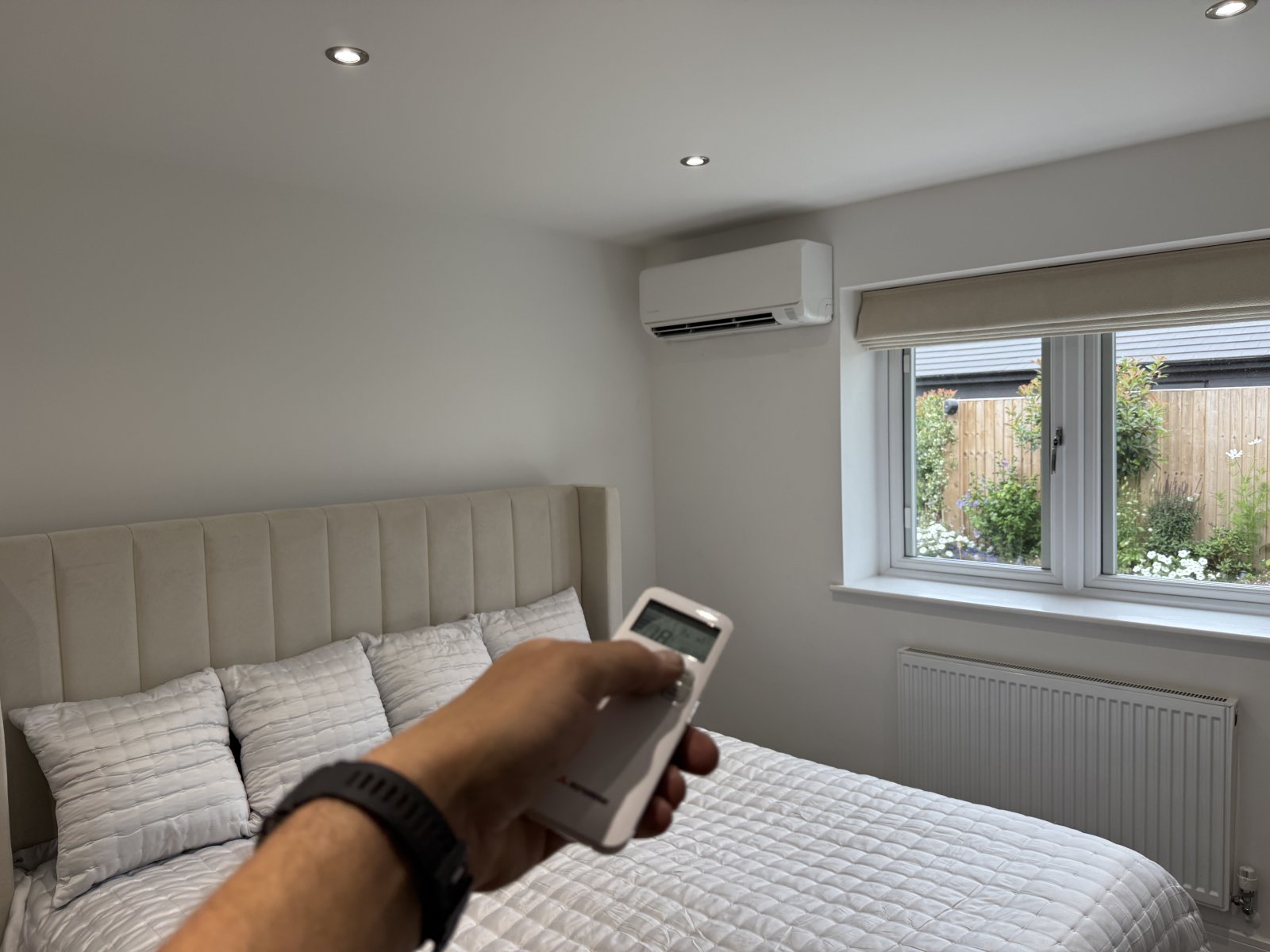
A single-room system may suit a room with a particular cooling need, while a multi-room setup can serve several spaces. The right arrangement depends on the property and how you use each room, not on a general rule or brand name. Indoor-unit position, outdoor-unit location and pipework routes all affect the installation plan and its finish. For more on indoor-unit placement and this type of setup, see our wall-mounted air conditioning guide.
How to think about noise, running and everyday use
Noise and day-to-day comfort depend on the equipment, its position and the installation design. Correct system sizing matters too. Split-system capacity should be based on room volume and heat load, taking account of glazing, insulation, orientation and occupancy, not floor area alone. Essex Home Air Conditioning is F-Gas/REFCOM registered, so refrigerant work is handled in line with the relevant requirements. This is one consideration when future-proofing your home against heat Basildon.
Plan a heat-ready air-conditioning installation in Basildon
A well-planned installation starts with the rooms, not a guess at equipment size. For homeowners in Basildon, an assessment helps shape a system around the property, household routines and the rooms that need cooling. It’s also the time to discuss indoor- and outdoor-unit positions, pipework routes and how to achieve a tidy finish.
Identify the hot rooms. Note where and when the temperature becomes uncomfortable.
Describe how you use each room. A bedroom, home office and living space may have different schedules and comfort needs.
Gather details about the property. Room dimensions, ceiling height, glazing and insulation help build a clearer picture.
Discuss suitable options. Consider unit positions, system layout and the cooling demand for each room.
What a home assessment needs to consider
Room volume matters, so note ceiling height as well as length and width. Include window size and glazing, insulation, room orientation and how many people typically use the space. These details help assess heat load and suitable split-system capacity. Floor area alone can’t determine the right system. Positioning matters too: indoor units need to suit the room layout, while outdoor-unit placement and pipework routes must work with the property. The design can then account for a neat, practical finish.
Why compliant installation and servicing matter
Split systems use refrigerant to transfer heat, so installation and later servicing need to be handled correctly. Essex Home Air Conditioning is F-Gas/REFCOM registered and carries out residential air conditioning installation and servicing. Routine servicing helps maintain a system and provides an opportunity to check its condition. For broader guidance on what installation involves, see our Essex installation homeowner guide.
With a property-specific plan, future-proofing your home against heat Basildon can combine sensible heat reduction with cooling designed for the rooms you use. Discuss a home cooling quotation.
Make your next step a considered one
Future-proofing your home against heat Basildon doesn’t mean changing everything at once. Start by noticing which rooms become uncomfortable and what you need from them. Use those observations to shape practical improvements or a cooling plan. A considered design should suit your home and routine, rather than rely on a one-size-fits-all choice.
Essex Home Air Conditioning provides residential air conditioning installation and servicing, with over 20 years of trade experience. The team serves homeowners in Basildon and across Essex, including Benfleet, Rayleigh, Canvey Island, Wickford, Billericay, Brentwood, Leigh-on-Sea, Southend, Maldon, Chelmsford, Burnham and Grays. Request a quotation to discuss your rooms, priorities and installation options.
With a clear plan in place, you can take practical steps towards a home that feels more comfortable through hotter spells.
Frequently Asked Questions
Can passive measures keep a Basildon home cool without air conditioning?
They can help, but they may not keep every room comfortable during prolonged hot weather. Shading a west-facing room before afternoon sun reaches it, for example, can reduce direct sunlight coming through the window. The result depends on the home and conditions outside. Homeowners future-proofing against heat in Basildon can combine these steps with a plan for rooms that still become too warm.
Does home air conditioning provide heating as well as cooling?
Yes. Modern split air conditioning can work as an air-to-air heat pump, moving heat to provide cooling in warm weather and heating when needed. That can make it useful beyond summer, including in a room that’s difficult to keep comfortable at other times of year. The system should be planned around the rooms you use and your household’s heating and cooling needs.
Is a portable unit as effective as a professionally installed split system?
Not necessarily. A portable unit can be moved, but its exhaust hose needs an opening to vent hot air outside. Gaps around a window opening can let warm air back in, reducing its effectiveness. A split system has indoor and outdoor components and doesn’t rely on a window hose. The better fit depends on how you use the room and your home.
How is the right air-conditioning size chosen for a room?
It’s chosen by assessing the room’s heat load, not by floor area alone. An installer considers the room’s volume, ceiling height, windows and glazing, insulation, orientation and usual occupancy. For example, two rooms with the same floor area may need different cooling if one has more glazing or stronger sun exposure. These details help determine a suitable split-system capacity for the space.
Why does F-Gas/REFCOM registration matter for a home installation?
It relates to the safe, compliant handling of refrigerant during installation and servicing. Refrigerant work needs appropriate competence, so using an F-Gas/REFCOM registered company helps provide reassurance that this part of the job is handled correctly. Essex Home Air Conditioning serves homeowners in Basildon and across Essex, including Benfleet, Rayleigh, Wickford and Southend, with residential installation and servicing.

Comments