


The Home Air Con Installation Process: A 2026 Homeowner’s Guide

A professional air conditioning installation should be felt, not seen. Most homeowners feel a mix of excitement and anxiety when they book a fitting. You want the relief of a cool bedroom, but you are likely worried about unsightly plastic trunking snaking across your exterior walls or layers of drilling dust settling on your furniture. It is a valid concern; your home is your pride and joy, not an industrial unit.
Understanding the home air con installation process is the first step to ensuring a result that is as discreet as it is effective. A high quality installation is about more than just blowing cold air. It requires methodical planning, tidy workmanship, and strict adherence to F-Gas regulations to keep your property safe and legally compliant. There are no shortcuts when it comes to a system that needs to perform reliably for years to come.
This guide explains exactly what happens on the day, from the initial site survey to the final handover of your certificates. We will show you how a specialist manages the mess, hides the pipework, and ensures your new system is whisper-quiet. By the end, you will know exactly how to achieve a comfortable home without the drama or the dust.
Table of Contents
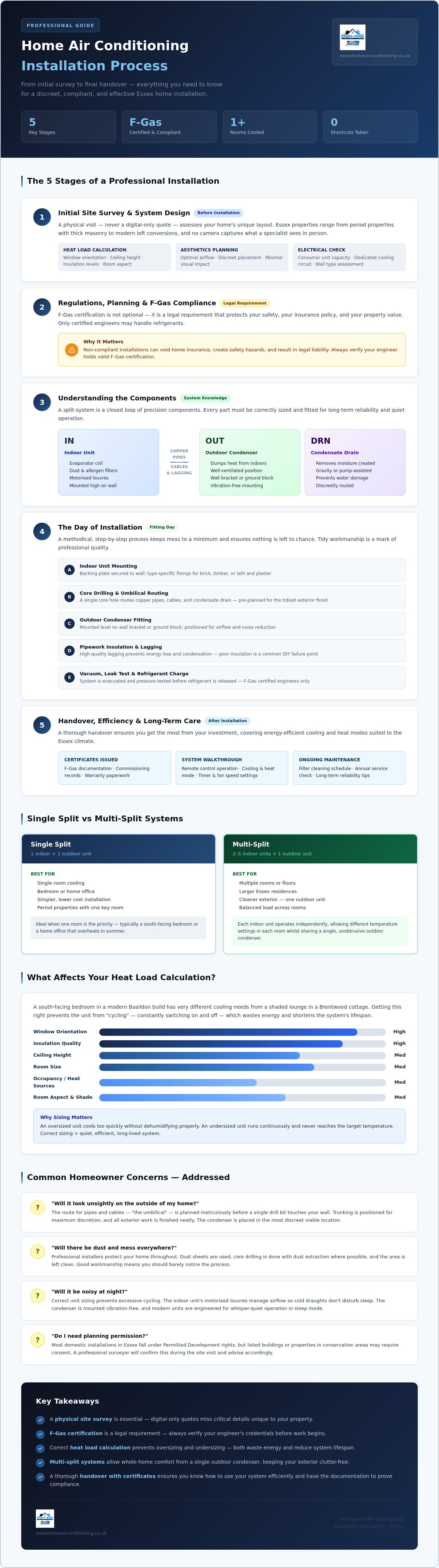
Starting Your Journey: The Initial Survey and System Design
The home air con installation process shouldn't be a guessing game. It begins with a professional site survey to assess heat load and room layout. Some national providers suggest digital-only quotes based on photos, but we believe this is a shortcut that leads to problems. Essex homes vary wildly, from period properties with thick masonry to complex loft conversions with limited head height. A physical visit allows us to see what a smartphone camera misses, ensuring your system is sized correctly from day one.
Calculating the "heat load" is a vital part of this visit. We don't just look at room size; we consider window orientation, ceiling height, and insulation levels. A south-facing bedroom in a modern Basildon build will have very different cooling needs than a shaded lounge in a Brentwood cottage. By matching the unit power to the actual thermal demands of the room, we ensure the system runs efficiently and quietly. This prevents the unit from "cycling" on and off too frequently, which saves wear and tear on the hardware.
We also spend time discussing aesthetics. The goal is to find a balance between optimal airflow and discreet placement. We want the indoor unit to be high enough to distribute air effectively but positioned so it doesn't dominate the room's decor. It is about making the technology work for your lifestyle, not the other way around. We will walk you through the options to find the most "invisible" result possible.
Assessing Your Home’s Electrical and Structure
A safe installation requires a solid foundation. We check your consumer unit to ensure your Essex home has the electrical capacity for a new, dedicated cooling circuit. Safety and compliance are our priorities; we never cut corners with power. We also identify your wall types. Whether it's solid brick, timber frame, or traditional lath and plaster, the mounting process must be tailored to ensure a secure fit. Part of this planning involves identifying the route for "the umbilical". This is the path for the pipes and cables that connect your units. We plan this meticulously to keep the exterior finish as tidy as possible.
Designing for Multi-Room Comfort
For larger residences, you may need to decide between a single split or a multi-split setup. A single split is perfect for a single room, but a multi-split system allows you to run several indoor units from one outdoor condenser. This is a great way to organise your home cooling system design for maximum efficiency and kerb appeal. By balancing the load across multiple units, we ensure each room reaches your favourite temperature whilst keeping the exterior of your property uncluttered and professional.
Understanding the Components: Indoor Units, Outdoor Condensers, and Pipework
A wall-mounted air conditioner is more than just a "white box" on the wall. During the home air con installation process, we integrate several high-precision components that work in harmony to move heat from inside your home to the outside. It is a closed-loop system where every part must be sized and fitted correctly to ensure long-term reliability and whisper-quiet operation.
The indoor unit is the face of the system. Inside, it houses the evaporator coil and sophisticated filters that scrub the air of dust and allergens. The motorised louvres are what manage the air behaviour, ensuring you don't have a cold draught hitting you directly whilst you relax. We focus on placing these units where they can circulate air effectively without dominating your interior design.
Outside, the condenser acts as the powerhouse. It needs a well-ventilated, discreet spot to dump the heat collected from indoors. We use sturdy wall brackets or ground-level mounting blocks to keep it level and vibration-free. If you have concerns about where the outdoor unit will sit, get in touch for a chat about the best layout for your specific property.
Connecting these two units is the refrigerant pipework and interconnecting cables. These are the "veins" and "nerves" of the system. We use pair-coil copper pipes to carry the refrigerant. High-quality lagging is essential here; poor insulation leads to energy loss and unwanted condensation. The cables allow the units to communicate, ensuring the condenser only works as hard as necessary to maintain your favourite temperature.
The Critical Role of Condensate Drainage
When warm air hits the cold internal coils, moisture is naturally created. This "condensate" needs to be removed safely. A gravity drain is the simplest and most reliable method, but if the unit is on an internal wall, we may use a small, quiet condensate pump. We take great care to hide these drainage lines within tidy, UV-stable trunking that matches your exterior brickwork, protecting your home's kerb appeal and preventing damp issues.
Wall-Mounted Split Systems Explained
These systems are considered the gold standard for domestic AC installation in Basildon and across Essex. Unlike noisy portable units that require a window to be left open, a fixed split system is completely sealed and significantly more efficient. We always ensure units are positioned with enough clearance for future maintenance, making it easy to keep the system running at peak performance for years to come.
Essential Preparation: Regulations, Planning, and F-Gas Compliance
Before any tools are lifted, the home air con installation process must satisfy strict legal and safety standards. It isn't just about good practice; it's about the law. The most critical regulation involves F-Gas. It's illegal for anyone other than a certified professional to handle the refrigerants used in these systems. These gases are powerful greenhouse agents. Improper handling carries heavy fines and environmental risks. We don't just "top it up". We manage it with certified precision from start to finish.
Once the work is complete, you must receive an F-Gas certificate. This document is a vital piece of paperwork for your home insurance and your manufacturer warranty. Without it, your policy might be void. The manufacturer could also refuse to honour parts replacements if the system fails. It proves that the gas was handled by a registered specialist who follows the rules. We keep these records safe so you don't have to worry about compliance down the line.
Planning permission is another common concern for Essex homeowners. In most cases, a residential installation falls under "Permitted Development Rights". This means you don't need a formal application. However, if you live in a conservation area or a listed building in Maldon or Chelmsford, the rules change. We help you navigate these local nuances. We ensure your outdoor condenser is placed in a way that respects local heritage whilst keeping you cool.
Health and Safety on the Job
We take safety seriously. Whether we're working at height to reach a first floor bedroom in Southend or Grays, or handling the high voltage connections required for a new circuit, we follow UK wiring regulations to the letter. Every installation includes responsible waste disposal. We don't leave old packaging or hazardous materials behind. We believe in leaving your home exactly as we found it, just much more comfortable.
Why Professional Installation is Non-Negotiable
The temptation of a DIY kit is a false economy. Attempting to install these systems yourself voids your warranty immediately and breaks environmental laws. A professional approach ensures the system is vacuum tested and leak checked before it ever starts running. This is why professional AC installation is essential for long term reliability. Choosing a local specialist means you have accountability. We're a safe pair of hands in your community, standing by the quality of our work for years to come.
The Day of Installation: A Step-by-Step Breakdown of the Fitting Process
The home air con installation process is a methodical sequence designed to protect your property whilst delivering a high-performance cooling system. When we arrive at your home, we don't just start drilling. We follow a disciplined routine that ensures the work is completed to the highest standard with minimal fuss. It is about precision, not just speed.
Step 1: Preparation and Protection. We start by laying down heavy-duty floor protectors and covering your furniture with clean dust sheets. Keeping your home tidy is our first priority.
Step 2: Mounting the Indoor Unit. We identify the exact position for the indoor unit and secure the mounting bracket. Precision drilling is used to ensure the unit sits perfectly level, which is vital for correct condensate drainage.
Step 3: Exterior Work. A core drill is used to create the exit point for the pipework. Outside, we mount the condenser unit on a secure base or wall bracket, ensuring it has plenty of space for airflow.
Step 4: Connection and Vacuuming. We link the two units with the copper pipework and electrical cables. Crucially, we use a vacuum pump to remove all air and moisture from the pipes. This step is essential for the longevity of the compressor.
Step 5: Commissioning and Testing. Once the system is sealed, we perform a pressure test to ensure there are no leaks. We then run the system through its full range of modes to check that it is cooling and heating perfectly.
If you are ready to enjoy a cooler, more comfortable home, contact our team today to discuss your installation.
Minimising Disruption in Your Home
A standard single-room installation usually takes a single day. We understand that having tradespeople in your house can be stressful. Whilst the core drilling process produces some noise and dust, we use integrated vacuum systems to catch debris at the source. Most of our customers are surprised by how quiet the rest of the day is. We work efficiently to return your home to its normal state as quickly as possible.
The Professional Finish
The job isn't finished until it looks right. We use high-quality, UV-stable trunking to hide the external pipework, choosing colours that blend with your brickwork or render. All external holes are sealed with weather-proof materials to prevent any draughts or moisture ingress. Finally, we perform a joint walk-around with you to ensure you are completely happy with the visual finish of the units and the tidy state of your property.
After the Install: Handover, Efficiency, and Long-Term Care
The home air con installation process doesn't end when the last screw is tightened. We believe the handover is just as important as the fitting itself. We take the time to sit down with you and explain exactly how to get the most out of your new investment. This isn't just about showing you which button turns it on; it's about ensuring you understand the system's behaviour and how to keep it running at peak performance.
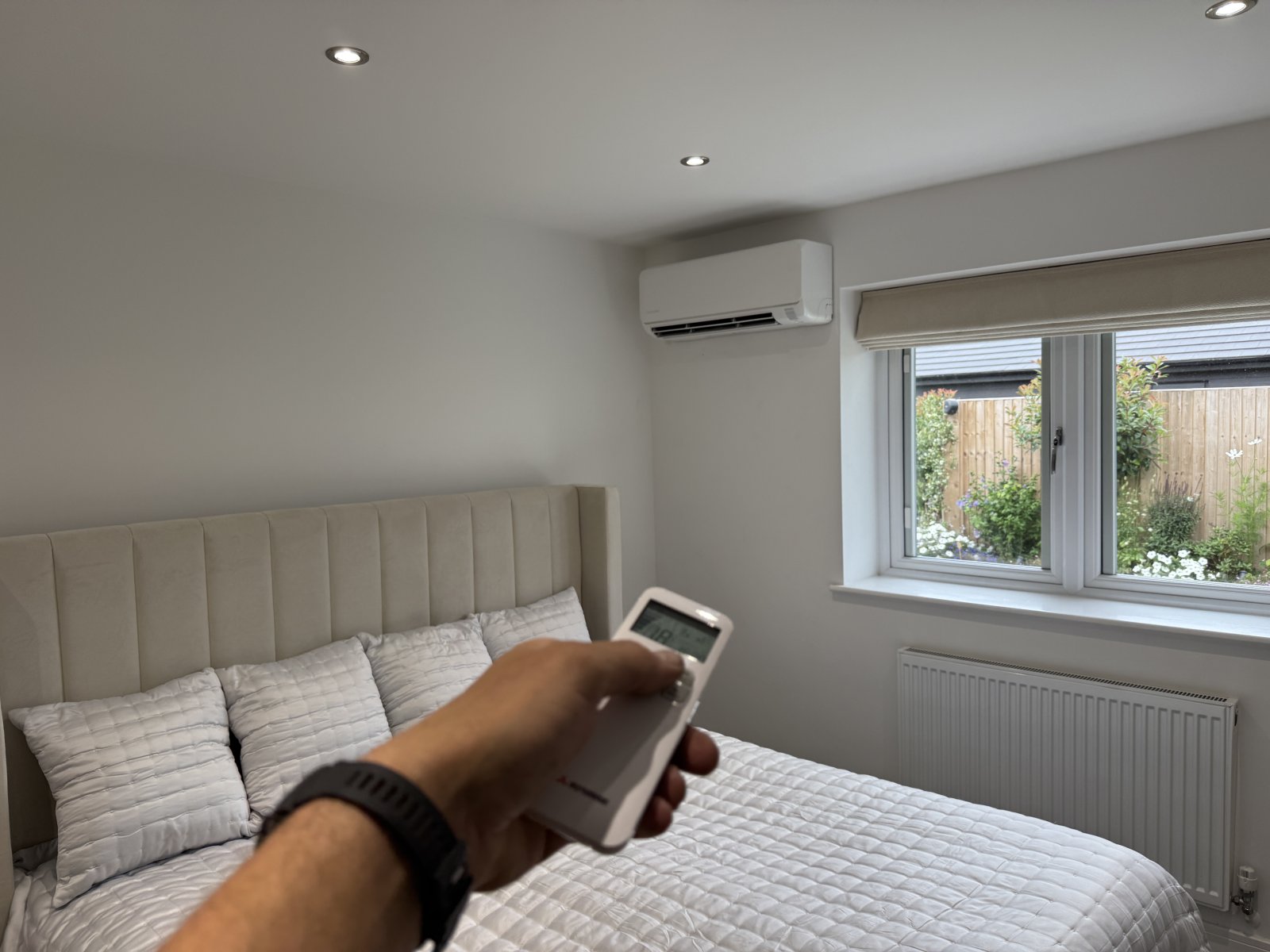
We'll walk you through the various modes available on your remote. Most homeowners focus on the "Cool" setting, but these units are also incredibly efficient heaters during the Essex winter. The "Dehumidify" mode is a lifesaver during those muggy July nights when the air feels heavy. We'll also help you set your favourite temperature. For the best balance of comfort and energy efficiency in our local climate, we usually recommend aiming for 21 to 23 degrees Celsius. Setting the unit to 16 degrees won't cool the room any faster; it just makes the system work harder for longer.
Before we leave, we provide all the necessary documentation. This includes the manufacturer manuals and your F-Gas compliance certificate. As we discussed earlier, this certificate is essential for your home insurance and warranty, so keep it in a safe place. During the first 48 hours, your system will settle in. You might notice a faint "new" smell for the first hour of operation, which is perfectly normal. We encourage you to run the system through its paces whilst we're still fresh in your mind. If you have any questions, you'll find us just a phone call away.
Maintaining Peak Efficiency
Your system is a high-performance machine. To keep it that way, there are a few simple tasks you can handle yourself. The internal dust filters should be checked and rinsed every few months to ensure unrestricted airflow. However, a DIY approach only goes so far. To maintain your manufacturer warranty, an annual professional check is mandatory. Booking your first air conditioning servicing in Essex ensures your system is clean, safe, and ready before the summer rush begins.
Choosing Your Local Essex Specialist
Choosing a local specialist offers a level of accountability that national chains simply can't match. We live and work in the same community as our customers. With Oliver’s 20 years of trade experience, we've built a reputation for tidy, compliant, and reliable work across the county. If you're looking for trusted home air conditioning installers in Chelmsford or the surrounding areas, we're here to help. We provide honest, unpretentious advice and bespoke quotes tailored to the specific needs of your property.
Ready to Transform Your Home Comfort?
A successful home air con installation process relies on three things: expert design, legal compliance, and a tidy finish. By choosing a physical survey over a digital guess, you ensure your system is perfectly sized for your specific room. You also protect your property by insisting on F-Gas certification, which keeps your manufacturer warranty valid and your home insurance secure.
We believe in doing things the right way. Led by Oliver with 20 years of trade experience, we are specialists in residential installations that prioritise your home’s aesthetics. We manage the mess, hide the pipework, and leave you with a whisper-quiet system that works exactly as it should. There's no jargon and no high-pressure sales; just honest, local expertise you can trust.
Get a Professional Quote from Your Local Essex Air Con Specialist to find out how we can help. A cooler, more comfortable home is just a conversation away.
Frequently Asked Questions
How long does the home air con installation process take?
A standard single-room installation usually takes a single day from start to finish. If you are opting for a more complex multi-room setup, the work might extend to two or three days. The exact duration depends on the length of the pipework runs and the building's structure. We always provide a firm schedule during our initial visit so you know exactly what to expect.
Will there be a lot of mess during the installation?
We follow a strict tidy fitting protocol to ensure your home stays clean and dust-free throughout the day. This includes using heavy-duty floor protectors and covering your furniture with clean sheets. When drilling the core holes for pipework, we use industrial vacuums to catch dust at the source. Our goal is to leave your property as neat as we found it, but with a new level of comfort.
Do I need planning permission for air conditioning in Essex?
Most residential installations in Essex are considered Permitted Development and do not need a formal planning application. This assumes the outdoor unit is placed discreetly and meets certain size criteria. However, rules are stricter for listed buildings or properties in conservation areas like Maldon. We can help you identify if your specific property needs a quick check with the local planning office before we begin.
Can I install a split system air conditioner myself?
No, it is illegal in the UK for anyone other than an F-Gas certified professional to install a split system. The home air con installation process must be carried out by a qualified engineer to comply with environmental laws regarding refrigerant handling. Beyond the legal risks, a DIY install will immediately void your manufacturer warranty. Using a professional ensures the system is vacuumed, leak-tested, and safe for long-term use.
Where is the best place to put the outdoor air con unit?
The best location for an outdoor condenser is a flat, stable surface with excellent ventilation. It needs clear space around it to draw in air and reject heat effectively. We often use sturdy wall brackets or ground-level mounting blocks in discreet spots. We aim to keep the unit away from bedroom windows where possible and ensure the pipework route is as direct and tidy as possible.
What is an F-Gas certificate and why do I need one?
An F-Gas certificate is your legal proof that the refrigerant in your system was handled by a certified specialist. You need this document to keep your manufacturer warranty valid and to ensure your home insurance remains fully compliant. It is a vital part of the home air con installation process, confirming that the system was pressure-tested and is free from leaks that could harm the environment.
Does air conditioning also provide heating for my home?
Yes, modern split systems are incredibly efficient at heating your home as well as cooling it. They work as air-to-air heat pumps, which are often more cost-effective than traditional electric radiators. This makes them a brilliant year-round solution for Essex homeowners. You can switch from cooling your bedroom on a hot July night to warming it on a frosty January morning using the same remote control.
How often should a new home air conditioning system be serviced?
We recommend a professional service at least once every twelve months to maintain peak efficiency. Annual servicing is almost always a requirement to keep your manufacturer warranty valid. It allows us to clean the internal filters, check the outdoor coil for debris, and ensure the condensate drainage is flowing correctly. Regular care prevents unexpected breakdowns and ensures your system is ready for the peak of summer.


Comments