


What to Expect on AC Installation Day in Canvey Island

Having home air conditioning fitted should never mean turning your living space into a chaotic, dust-filled building site. If you are anxious about ruined carpets, messy external pipework, or loud equipment disturbing the neighbours, you are certainly not alone. Understanding what to expect on ac installation day Canvey Island homeowners can count on removes the stress and replaces it with complete clarity.
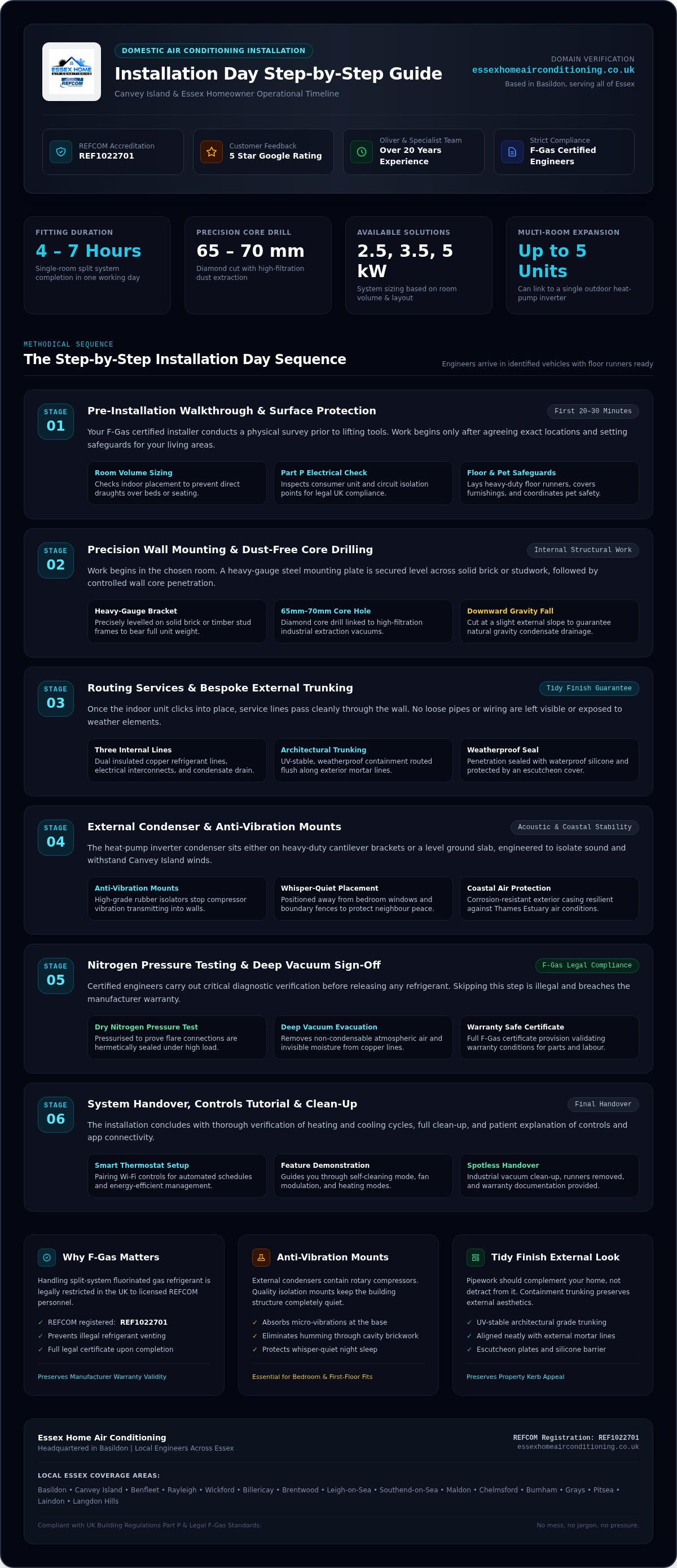
In this guide, you will discover the exact step-by-step process of domestic air conditioning installation day for your Canvey Island home. We outline the clear timeline from the moment protective floor runners go down to the final system handover. You will also learn how bespoke trunking keeps pipework tidy, how anti-vibration mounts keep units quiet, and how certified engineers guarantee every stage meets strict F-Gas legal standards for long-term peace of mind.
Table of Contents
Arrival and Preparation: How Your Installation Day Begins
A successful domestic fitting starts with punctuality and clear communication. Knowing what to expect on ac installation day Canvey Island homeowners arrange begins with a prompt morning arrival. Your engineer will arrive in an identified vehicle, introduce themselves, and immediately establish a safe, orderly environment before lifting a single tool.
Every home is different. Because of this, the team never assumes or rushes into drilling. Instead, the first twenty minutes are dedicated to walking through the job together, verifying plans, and ensuring your interior remains pristine throughout the day.
The Pre-Installation Walkthrough and Position Check
Before unpacking equipment, your F-Gas certified installer conducts a thorough physical survey of the proposed layout. As detailed in the principles of heating, ventilation, and air conditioning (HVAC) design, correct positioning is vital for thermal comfort and energy performance.
During this initial walkthrough, the engineer will:
Confirm that system sizing based on room volume matches the planned indoor unit location, avoiding uncomfortable draughts directly over beds or seating areas.
Inspect the domestic consumer unit and nearby electrical supply points to ensure complete compliance with UK Building Regulations Part P standards.
Double-check external wall measurements, confirming the outdoor condenser sits well away from neighbouring boundaries and bedroom windows to prevent unwanted noise transfer.
If you have any last-minute questions about pipe pathways or controls, this walkthrough is the ideal moment to raise them. Once you are completely happy, physical preparations begin.
Protecting Your Living Space and Furnishings
Treating your property with care is an essential part of knowing what to expect on ac installation day Canvey Island residents can trust. Domestic work can generate debris, but professional installers take strict precautions so your home stays immaculate.
First, heavy-duty protective runners are rolled out across high-traffic zones, shielding your carpets, timber flooring, or tiles from the front entrance through to the room being fitted. The team covers nearby furniture with clean dust sheets and establishes an organised tool station, keeping hazardous gear neatly arranged inside or out in the garden. Engineers will also coordinate with you regarding household pets, ensuring dogs and cats stay secure in a quiet room away from open exterior doors while tools and units are carried into the property.
The Step-by-Step Installation Sequence on the Day
Most single-room split systems take between four and seven hours to fit. Knowing what to expect on ac installation day Canvey Island homeowners book means understanding the precise order of physical work. Certified engineers follow a methodical five-stage sequence designed to keep disruption to an absolute minimum.
Here is how that physical installation unfolds across the morning and early afternoon:
Step 1: Precision mounting plate fixing and core hole drilling.
Step 2: Securing the indoor wall-mounted split system unit.
Step 3: Running insulated copper refrigerant pipework and electrical interconnects.
Step 4: Installing external containment trunking for a neat, tidy finish.
Step 5: Mounting the external heat-pump inverter unit securely.
Dust-Free Core Drilling and Wall Bracket Mounting
Work begins inside the chosen room. The installer secures a heavy-gauge steel mounting plate to the wall, checking its level across solid brick or timber studwork. Next comes the core hole penetration, usually 65mm to 70mm in diameter.
To keep the room spotless, engineers use diamond core drills connected to high-filtration industrial extraction vacuums. The hole is cut with a deliberate slight downward fall toward the exterior. This angle is essential, ensuring natural gravity drainage for internal condensation so water never pools inside the casing.
Routing Services with a Neat Tidy Finish
Once the indoor unit clicks firmly onto its bracket, the service lines pass cleanly through the wall. These include dual insulated copper pipes for the refrigerant, electrical interconnect cabling, and a dedicated condensate drain hose. Outside, these lines are never left exposed or draped across brickwork.
Instead, the engineer channels them into UV-stable, weatherproof architectural trunking. This trunking runs flush along exterior mortar lines to preserve your property's kerb appeal. The external wall hole is then permanently caulked with waterproof silicone and sealed with an escutcheon cover to prevent draughts or rain penetration.
Positioning and Fixing the Outdoor Condenser
The outdoor heat-pump inverter must sit firmly and silently. Depending on ground levels and wall construction, it is mounted on heavy-duty cantilever wall brackets or anchored to a solid level ground slab.
Specialist anti-vibration mounts are placed under each foot of the unit. These rubber dampening blocks isolate motor movement, stopping mechanical hum from transferring through your external brickwork. The engineer also ensures generous clearances behind and around the unit for unrestricted airflow. All connections comply with strict legal F-Gas requirements. For expert advice on planning your home layout, you can easily speak to our local team at Essex Home Air Conditioning.
Vacuum Testing, Commissioning, and Legal F-Gas Sign-Off
Connecting the physical hardware is only half the job. The most critical technical work happens once the units are securely in place. When considering what to expect on ac installation day Canvey Island homeowners should know that rigorous testing takes place before any cooling or heating turns on. These steps guarantee the system runs efficiently, safely, and without leaks for years to come.
Pressure Testing and Moisture Evacuation
Before releasing any refrigerant, the engineer must prove the copper circuit is completely airtight. Using dry oxygen-free nitrogen, the installer pressurises the pipework well above typical operating pressure. This test verifies that every flared joint and mechanical connection is entirely sound.
Once pressure testing is complete, a dual-stage vacuum pump connects to the service ports. This process draws atmospheric air and moisture out of the copper lines down to deep vacuum levels. Moisture inside an air conditioning circuit causes internal acid formation and degrades compressor oil. Following technical standards supported by the professional body for building services engineering, the engineer holds the vacuum to confirm a total hermetic seal before safely releasing the refrigerant.
Electrical Testing and Heat-Pump Inverter Startup
With pipework verified, the engineer connects the mains electrical feed through a dedicated external rotary isolator switch. This setup satisfies current UK electrical regulations and provides safe isolation for future servicing.
Next comes the initial system startup. The variable-speed heat-pump inverter powers up smoothly without jolting the household electrical supply. The installer runs the unit through heating and cooling cycles, using digital thermal probes to measure the temperature differential between supply and return air. This confirms that the unit delivers its rated output quietly and effectively.
Why REFCOM F-Gas Certification Protects Your Investment
Every domestic air conditioning installation requires sign-off from a certified professional. By UK law, anyone handling systems containing fluorinated refrigerants must hold current F-Gas credentials, backed by registers like REFCOM. Without certified installation, manufacturers immediately void their parts and labour warranty.
A certified engineer prevents accidental venting of gas into the atmosphere. Once commissioning finishes, all pressure readings, vacuum levels, and refrigerant quantities are documented. You receive full compliance records for your home files, giving you proof of legal standards and keeping your manufacturer warranty fully intact.
Canvey Island Property Factors: Coastal Air and Home Layouts
Canvey Island presents distinct environmental conditions that standard trade guides rarely consider. Salt spray from the Thames Estuary, coastal wind patterns, and local architectural styles all influence how equipment must be fitted. Understanding what to expect on ac installation day Canvey Island properties require ensures your hardware lasts for years without premature wear or corrosion.
Combating Estuary Air and Weather Exposure
Salt-laden marine air accelerates corrosion on untreated condenser fins and metal casings. An experienced local engineer will always factor this in when selecting and mounting outdoor hardware.
To shield the system against harsh coastal conditions, installers take several protective measures on the day:
Fitting external units equipped with factory-treated blue-fin hydrophilic coatings to prevent salt deposits from eating into delicate aluminium coils.
Using high-grade stainless steel or heavily powder-coated cantilever brackets that resist rust and surface peeling.
Orienting the external condenser so it remains shielded from prevailing south-westerly estuary winds, ensuring the fan motor operates without excess backpressure.
Adapting to Single-Storey Bungalows and Chalet Roofs
A substantial portion of Canvey Island housing consists of compact chalets and single-storey bungalows. These timber-frame and brick-skin properties require a tailored approach to pipe routing and internal unit mounting.
Where practical, engineers route copper pipework directly up into the loft void. This keeps external walls uncluttered, preserving your home's kerb appeal. Running lines through the attic also facilitates continuous gravity drainage for condensate water, eliminating the need for noisy mechanical mini-pumps that can break down.
Inside, the indoor unit is mounted close to the ceiling line. This position makes full use of the Coanda effect, circulating conditioned air along the ceiling to prevent chilling draughts in compact bedrooms. Outside, because Canvey sits within low-lying flood-sensitive ground, engineers typically advise mounting the outdoor unit at least half a metre up on solid brickwork rather than directly onto a low patio slab. If you want practical advice tailored specifically to your layout, contact our local team to discuss your plans.
Final Handover, Controls Tutorial, and Clean-Up
The final stage of the visit is just as important as the physical build. Part of knowing what to expect on ac installation day Canvey Island homeowners experience is a complete, unhurried handover. Engineers do not simply pack away their tools and leave; they take the time to ensure you feel entirely comfortable operating your new equipment from day one.
Mastering Your Remote and Smart App Controls
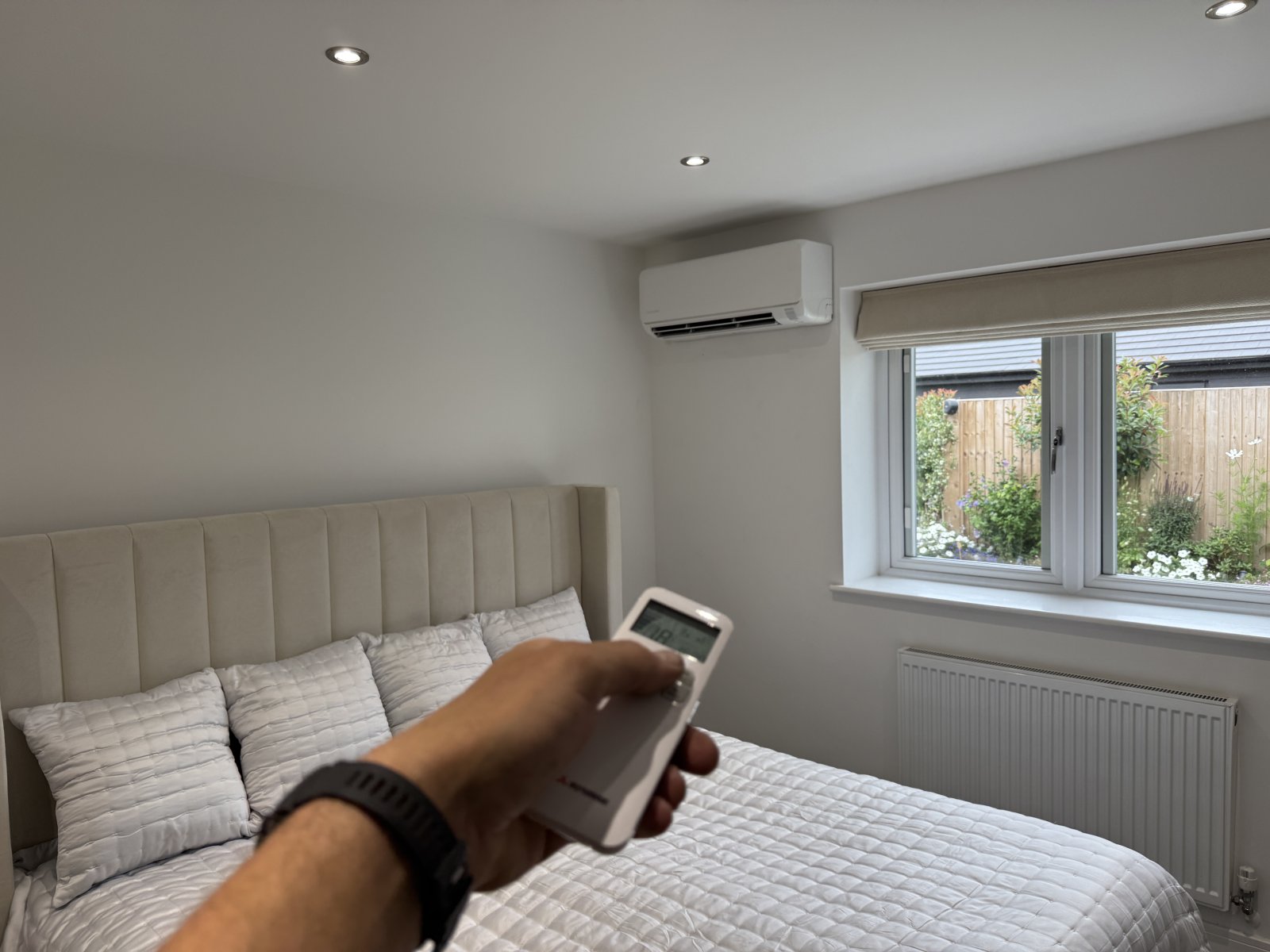
Your installer will sit down with you to walk through the handheld remote, cycling through cooling, heating, fan-only, and dehumidification modes. They will show you how to set quiet fan speeds, adjust louvres, and schedule timers for bedroom comfort.
If your unit features smart thermostat integration, the engineer helps connect the unit to your home Wi-Fi and pairs your smartphone app. They will also explain practical energy-saving habits, such as a cool the fabric strategy. By starting low-level cooling earlier in the day during warmer weather, you prevent heat from soaking into walls and furniture, lowering running effort later in the evening.
Routine Filter Care and Ongoing Maintenance Advice
Keeping your system running efficiently requires simple routine care. Your engineer demonstrates how to safely unclip the front intake grille, remove the washable dust filters, and rinse them under a cold tap.
They will also explain how to activate the self-cleaning mode. This feature runs a gentle drying cycle on internal coils after shutdown, stopping residual condensation and preventing mould buildup. Lastly, the engineer will explain how scheduling regular annual servicing preserves efficiency and keeps your manufacturer warranty valid against Thames Estuary weather conditions.
Final Clean-Up and Work Sign-Off
A true professional fitting always ends with a tidy finish. The engineers vacuum all indoor work areas, wipe down the new casing, and remove all protective carpet runners. Every bit of packaging, plastic wrapping, and copper offcut is packed into the van and taken away for proper disposal.
Before leaving, you will conduct a joint visual walkthrough to inspect the pipework trunking, check the outdoor unit, and sign off the commissioning paperwork. You can discover how our team can transform your home comfort with expert installation by reaching out to our local specialists today.
Enjoy Year-Round Home Comfort with Complete Peace of Mind
Knowing what to expect on ac installation day Canvey Island homeowners book replaces guesswork with reassurance. From morning dust sheets and diamond core drilling to nitrogen pressure testing and intuitive app controls, a domestic fitting is a calm, orderly process. Your living spaces remain tidy, your exterior walls look clean, and your cooling system performs reliably from the moment it powers up.
Led by Oliver with over 20 years of trade experience, our REFCOM accredited team (REF1022701) delivers fully certified, warranty-backed installations tailored specifically for coastal Essex properties. Backed by a 5 Star Google rating across residential projects, we take pride in delivering respectful service and exceptional finishes without mess or fuss. Ready to enjoy quiet, efficient climate control in your home? Book your free Canvey Island home survey today and take the first step towards effortless year-round comfort.
Frequently Asked Questions
How long does a domestic air conditioning installation take on the day?
A standard single-room split system installation typically takes between four and seven hours. If you are fitting a multi-room setup across several bedrooms or a living area, the process may extend across a second day. Your engineer arrives early in the morning, completes the full drilling, pipework, and commissioning stages without rushing, and leaves your home spotless well before the evening.
Will core drilling through external brickwork create a lot of mess in my house?
No, modern core drilling creates virtually zero indoor dust. Professional engineers connect specialised diamond core drills directly to high-filtration industrial extraction vacuums during the cut. In addition, heavy-duty floor runners and clean dust sheets protect your carpets and surrounding furniture. Any tiny stray brick particles are vacuumed up immediately, ensuring your room looks just as clean as when the team arrived.
Do I need to be at home during the entire installation process?
You only need to be present for the morning walkthrough and the afternoon handover. Knowing what to expect on ac installation day Canvey Island homeowners choose means having flexibility. Once you have confirmed unit positions and granted access to power and water, engineers work self-sufficiently. Returning an hour before completion allows you to review the completed system, learn the remote controls, and sign off the paperwork.
Can an air-to-air heat pump provide heating as well as cooling?
Yes, modern residential split systems are reverse-cycle air-to-air heat pumps that deliver efficient heating alongside cooling. In winter, the system extracts residual heat from outside air and transfers it indoors. Because variable-speed heat-pump inverter technology moves heat rather than generating it from an element, it warms a bedroom or conservatory rapidly and efficiently, providing year-round climate control from a single neat unit.
Where will the outdoor condenser unit be positioned in my garden?
Outdoor condensers are mounted low on an external wall or secured onto a level ground slab. On Canvey Island, units are positioned away from prevailing estuary winds and property boundaries to protect against salt air and preserve neighbour privacy. We also elevate wall mounts slightly to keep equipment safe from surface groundwater, ensuring free airflow around the rear coils for peak performance.
What paperwork or certification should I receive after the work is completed?
You should always receive formal commissioning documentation and a valid F-Gas compliance certificate. By UK law, refrigerant systems must be signed off by a REFCOM accredited engineer holding appropriate credentials. This paperwork details the pressure test logs, vacuum levels, and exact refrigerant charge. Retaining this record confirms building regulation compliance and keeps your manufacturer warranty fully valid should you ever need it.
Are air conditioning units noisy enough to disturb my Canvey Island neighbours?
Not at all. Modern residential units operate at whisper-quiet sound levels, typically under 20 decibels indoors and below 48 decibels outdoors. Quality installers fit anti-vibration mounts beneath the condenser feet, which stops mechanical vibrations from travelling into your walls or towards neighbouring fences. Understanding what to expect on ac installation day Canvey Island families plan ensures you get whisper-quiet operation that respects close residential boundaries.


Comments